a scientist uses radioactive dating to find the age of the rocks at several points on the ocean floor. she…
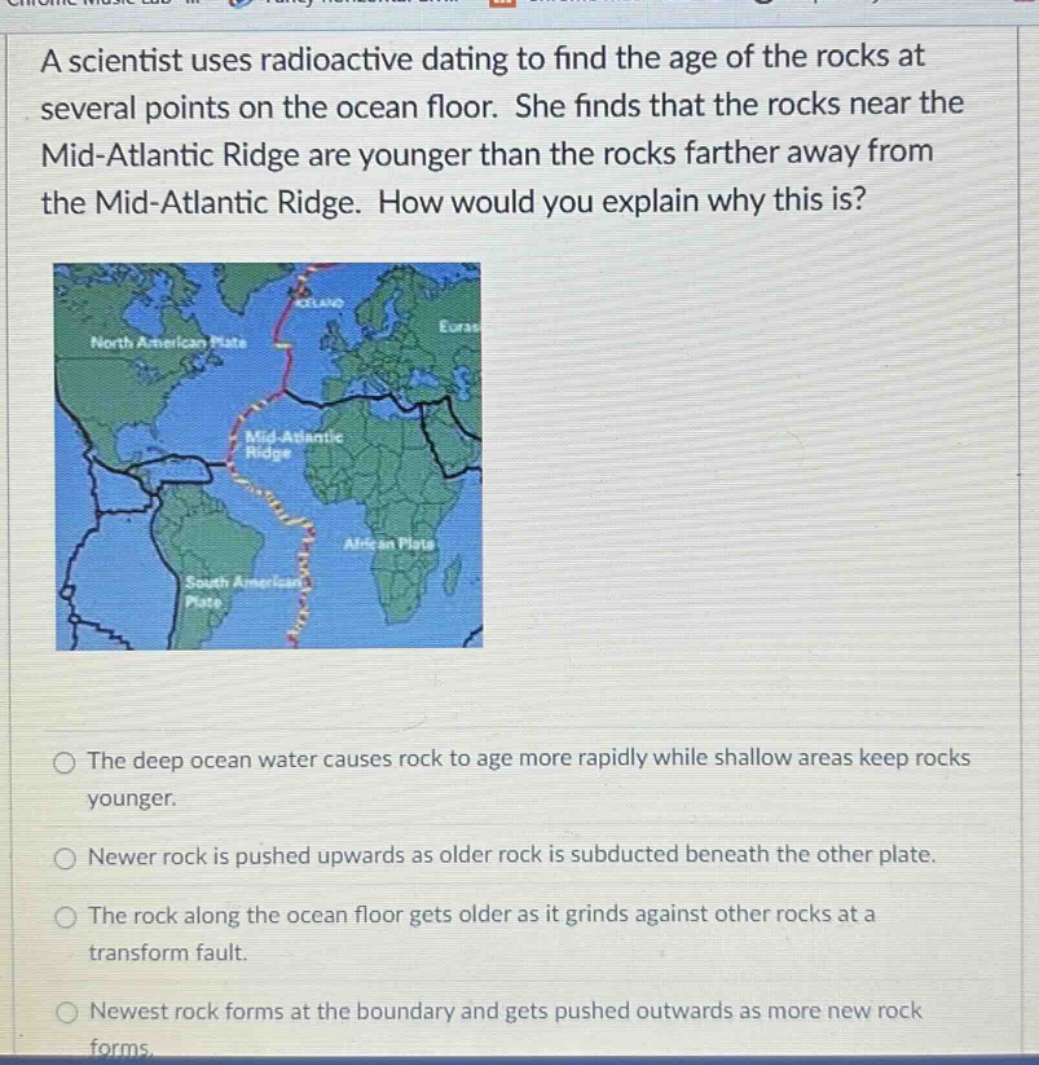
a scientist uses radioactive dating to find the age of the rocks at several points on the ocean floor. she finds that the rocks near the mid - atlantic ridge are younger than the rocks farther away from the mid - atlantic ridge. how would you explain why this is? the deep ocean water causes rock to age more rapidly while shallow areas keep rocks younger. newer rock is pushed upwards as older rock is subducted beneath the other plate. the rock along the ocean floor gets older as it grinds against other rocks at a transform fault. newest rock forms at the boundary and gets pushed outwards as more new rock forms.
Answer
Brief Explanations:
The Mid - Atlantic Ridge is a divergent plate boundary. Magma rises up at this boundary, cools and forms new rock. As more new rock forms, the existing rock is pushed away from the ridge, making rocks near the ridge younger and those farther away older.
Answer:
Newest rock forms at the boundary and gets pushed outwards as more new rock forms.