a scientist is using relative dating to determine the age of a fossil that she discovered. what would allow…
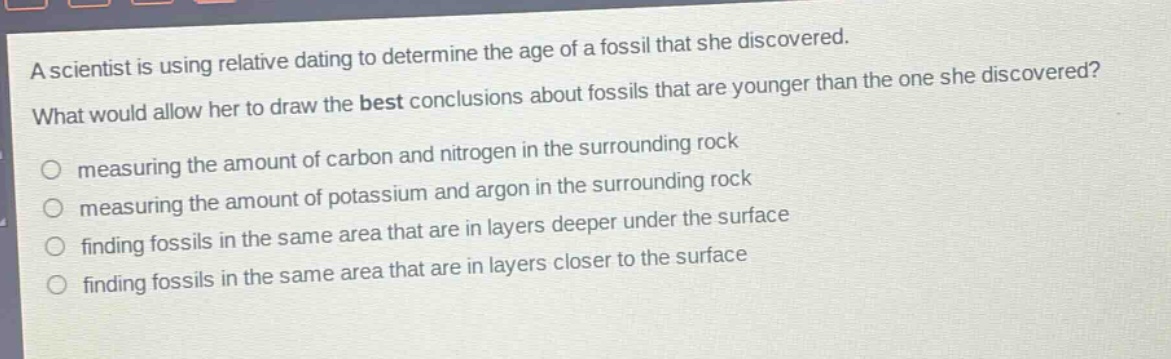
a scientist is using relative dating to determine the age of a fossil that she discovered. what would allow her to draw the best conclusions about fossils that are younger than the one she discovered? measuring the amount of carbon and nitrogen in the surrounding rock measuring the amount of potassium and argon in the surrounding rock finding fossils in the same area that are in layers deeper under the surface finding fossils in the same area that are in layers closer to the surface
Answer
Brief Explanations:
In relative - dating, fossils in layers closer to the surface are generally younger. Measuring carbon and nitrogen, or potassium and argon is radiometric dating. Deeper layers have older fossils.
Answer:
finding fossils in the same area that are in layers closer to the surface