select all that apply\nidentify the true statements about the neoclassical model of corporate social…
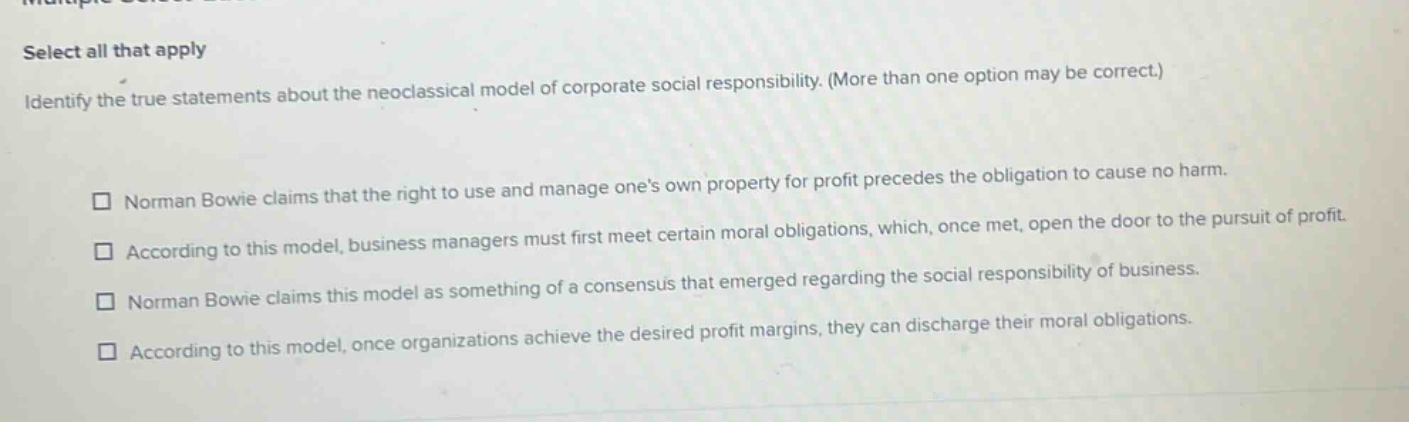
select all that apply\nidentify the true statements about the neoclassical model of corporate social responsibility. (more than one option may be correct.)\n□ norman bowie claims that the right to use and manage ones own property for profit precedes the obligation to cause no harm.\n□ according to this model, business managers must first meet certain moral obligations, which, once met, open the door to the pursuit of profit.\n□ norman bowie claims this model as something of a consensus that emerged regarding the social responsibility of business.\n□ according to this model, once organizations achieve the desired profit margins, they can discharge their moral obligations.
Answer
Brief Explanations:
The neoclassical model of corporate social responsibility posits that business managers must first meet certain moral obligations, after which they can pursue profit. Norman Bowie is associated with views related to property - rights and moral obligations in business. The idea that moral obligations are a pre - requisite for profit - seeking is key in this model, not that profit allows for the discharge of moral obligations.
Answer:
- Norman Bowie claims that the right to use and manage one's own property for profit precedes the obligation to cause no harm.
- According to this model, business managers must first meet certain moral obligations, which, once met, open the door to the pursuit of profit.