select all the reasons for checking glassware for cracks or chips prior to use. chips or cracks will make…
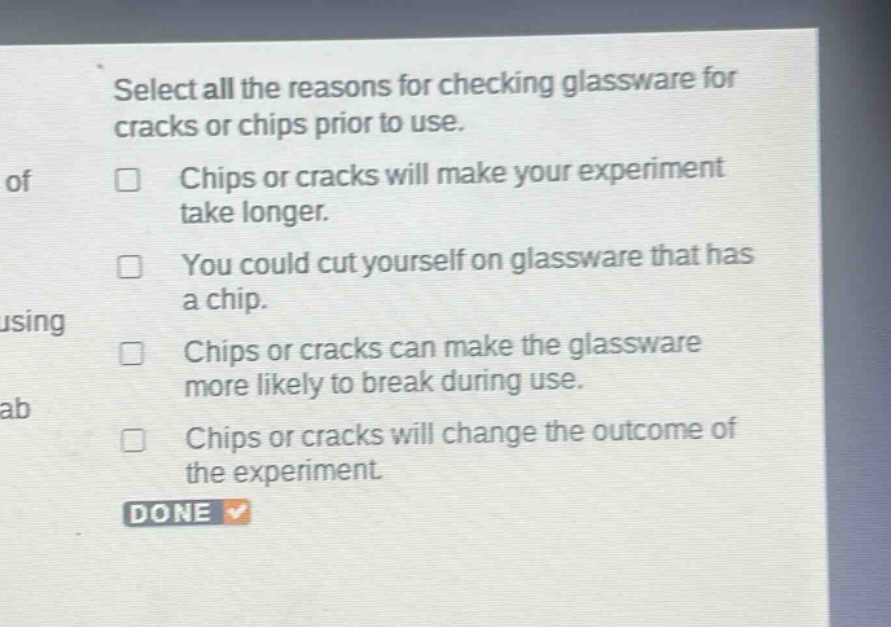
select all the reasons for checking glassware for cracks or chips prior to use. chips or cracks will make your experiment take longer. you could cut yourself on glassware that has a chip. chips or cracks can make the glassware more likely to break during use. chips or cracks will change the outcome of the experiment. done
Answer
Brief Explanations:
Chipped or cracked glassware can cause injury due to sharp edges. It is also more fragile and may break during use, and can potentially affect experimental results. There is no evidence that it makes an experiment take longer.
Answer:
- You could cut yourself on glassware that has a chip.
- Chips or cracks can make the glassware more likely to break during use.
- Chips or cracks will change the outcome of the experiment.