source: maryland department of health. (2018). overdose data and reports. retrieved july 12, 2019, from…
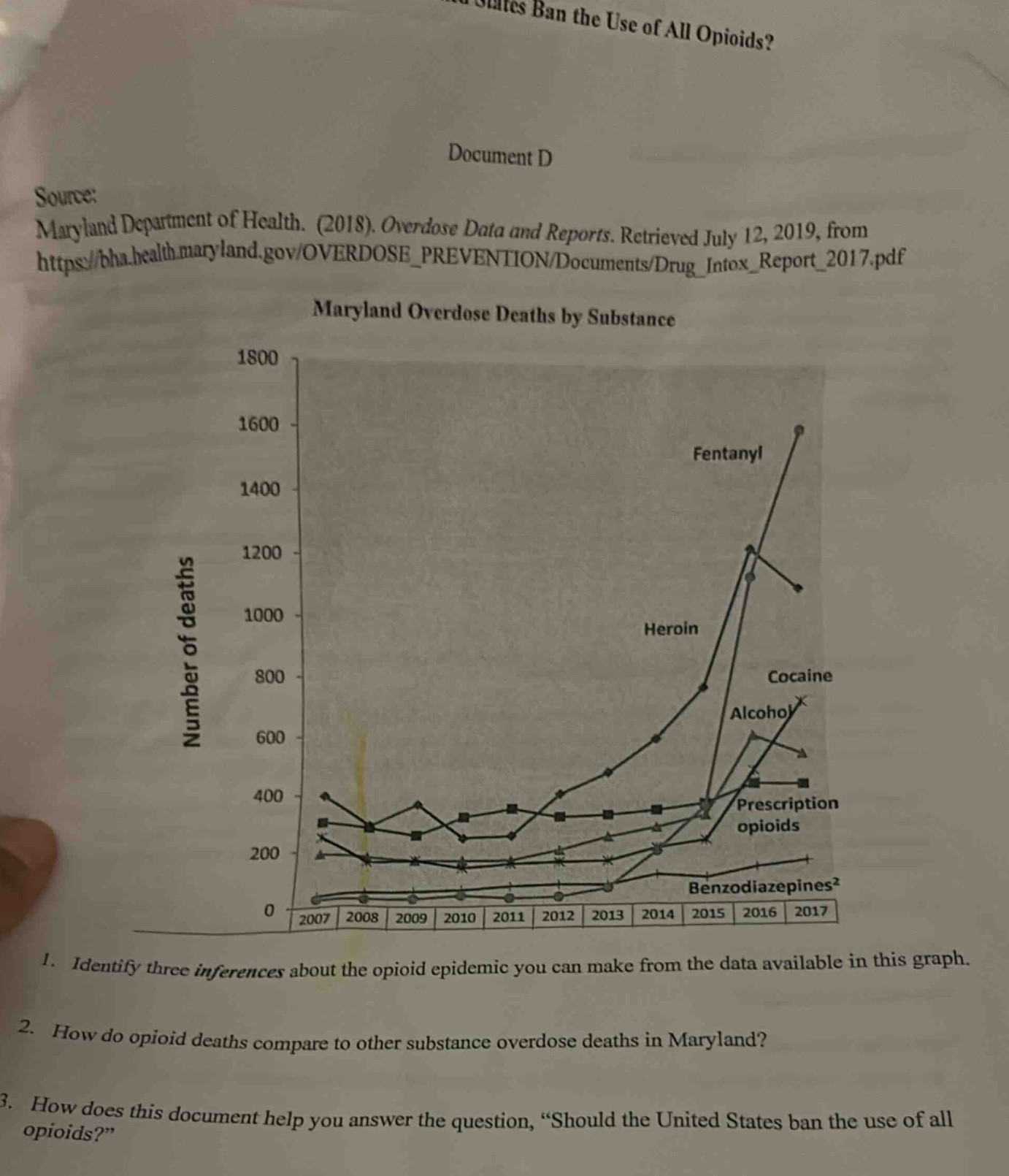
source: maryland department of health. (2018). overdose data and reports. retrieved july 12, 2019, from https://bha.health.maryland.gov/overdose_prevention/documents/drug_intox_report_2017.pdf maryland overdose deaths by substance 1. identify three inferences about the opioid epidemic you can make from the data available in this graph. 2. how do opioid deaths compare to other substance overdose deaths in maryland? 3. how does this document help you answer the question, “should the united states ban the use of all opioids?”
Answer
Answer:
- Inference 1: The number of deaths from fentanyl, a type of opioid, saw a dramatic increase from 2015 - 2017, indicating a growing problem within the opioid epidemic.
- Inference 2: Prescription opioid - related deaths remained relatively stable compared to the sharp rise in fentanyl deaths over the period shown.
- Inference 3: The overall trend of opioid - related deaths (including heroin and prescription opioids) was upward over the years 2007 - 2017, contributing to the severity of the opioid epidemic.
- Opioid deaths, especially those from fentanyl and heroin, were among the highest compared to other substances like cocaine, alcohol, and benzodiazepines. Prescription opioid deaths were also significant but less volatile in their increase compared to fentanyl.
- This document provides data on the scale of opioid - related deaths in Maryland. It shows the severity of the problem caused by opioids, which can be used to support the argument for a ban on all opioids as it highlights the high mortality rate associated with them. However, it also shows that prescription opioids have a different trend compared to illegal opioids like fentanyl and heroin, which may complicate the decision - making process as prescription opioids can have medical uses.
Brief Explanations:
For question 1, trends and comparisons in the graph data are used to make inferences about the opioid epidemic. For question 2, a direct comparison of the number of deaths from opioids and other substances is made. For question 3, the data's relevance to the broader policy question about banning opioids is considered, taking into account both the problem's severity and the complexity of opioid use (medical vs. illegal).