which statement is true for both mediation and arbitration?\n\na. a neutral third - party meets with both…
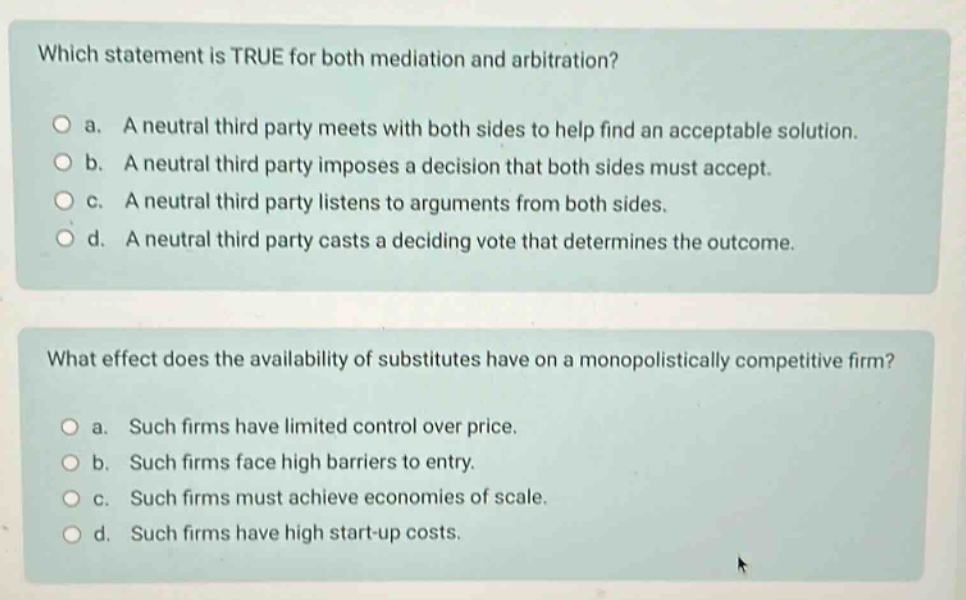
which statement is true for both mediation and arbitration?\n\na. a neutral third - party meets with both sides to help find an acceptable solution.\n\nb. a neutral third - party imposes a decision that both sides must accept.\n\nc. a neutral third - party listens to arguments from both sides.\n\nd. a neutral third - party casts a deciding vote that determines the outcome.\n\nwhat effect does the availability of substitutes have on a monopolistically competitive firm?\n\na. such firms have limited control over price.\n\nb. such firms face high barriers to entry.\n\nc. such firms must achieve economies of scale.\n\nd. such firms have high start - up costs.
Answer
Brief Explanations:
For the first question, in both mediation and arbitration, a neutral third - party listens to arguments from both sides. Mediation aims to help find an acceptable solution but doesn't impose a decision, and arbitration may impose a decision but not always by a deciding vote. For the second question, in a monopolistically competitive market, the availability of substitutes limits a firm's control over price as consumers can switch to substitutes if the price is too high.
Answer:
- C. A neutral third party listens to arguments from both sides.
- A. Such firms have limited control over price.