stress caused rock layers to bend, and these layers are a small part of a broad, gentle fold. stress at a…
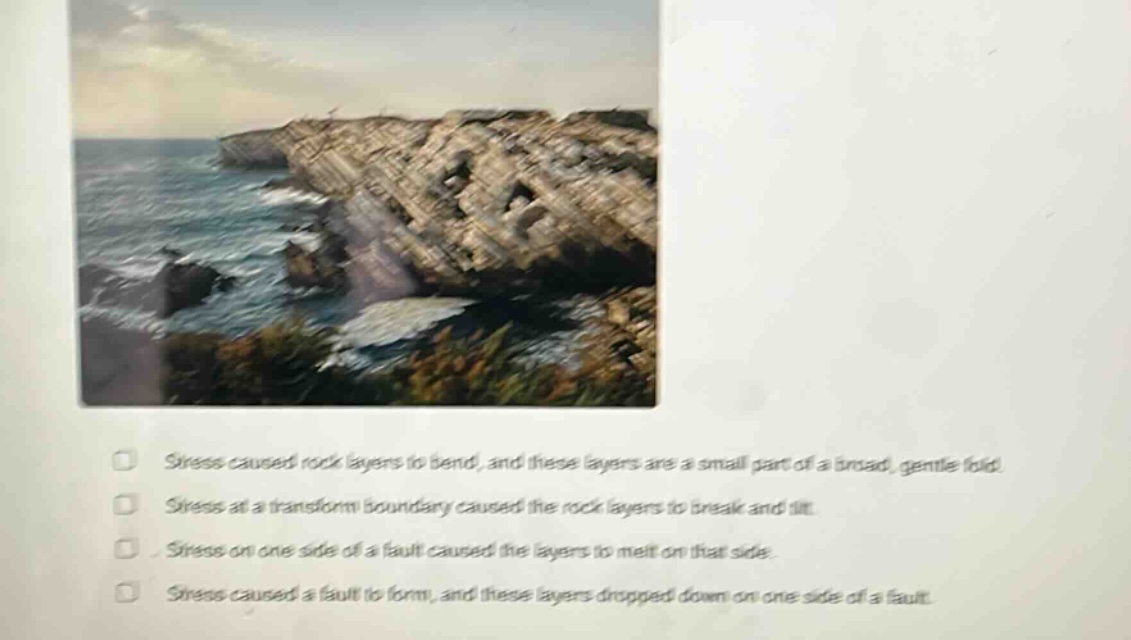
stress caused rock layers to bend, and these layers are a small part of a broad, gentle fold. stress at a transform boundary caused the rock layers to break and tilt. stress on one side of a fault caused the layers to meet on that side. stress caused a fault to form, and these layers dropped down on one side of a fault.
Answer
Brief Explanations:
The image shows tilted rock - layers. Folding occurs when stress causes rock layers to bend. The description of rock layers being part of a broad, gentle fold aligns with the concept of folding due to stress. Transform boundaries cause rocks to break and slide horizontally, not the pattern seen here. Fault - related stress causing layers to meet or drop in the ways described doesn't match the visual pattern of gently tilted layers.
Answer:
Stress caused rock layers to bend, and these layers are a small part of a broad, gentle fold.