which of these structures form when materials are deposited, buried, and cemented? a. intrusive structures…
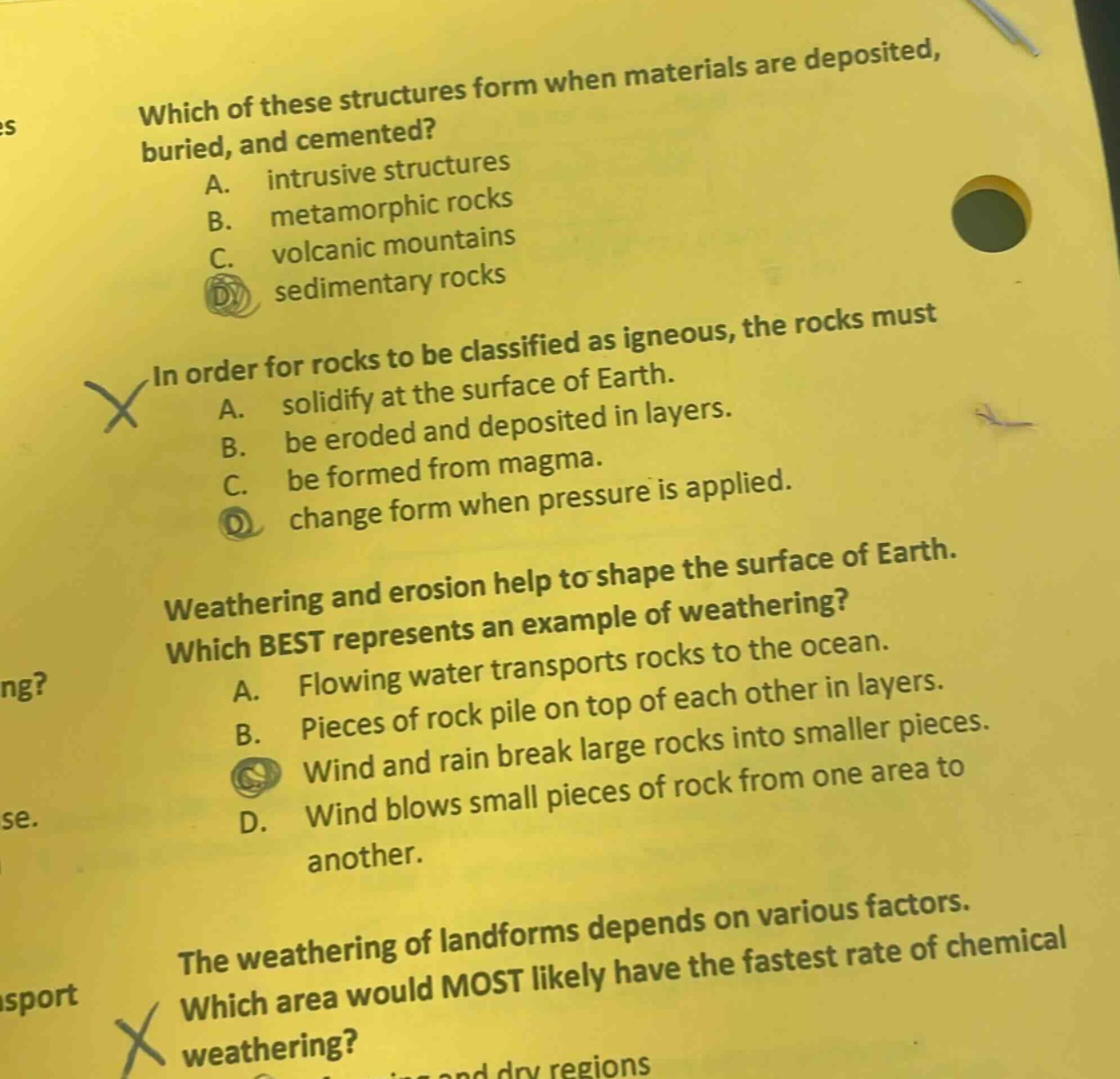
which of these structures form when materials are deposited, buried, and cemented? a. intrusive structures b. metamorphic rocks c. volcanic mountains d. sedimentary rocks in order for rocks to be classified as igneous, the rocks must a. solidify at the surface of earth. b. be eroded and deposited in layers. c. be formed from magma. d. change form when pressure is applied. weathering and erosion help to shape the surface of earth. which best represents an example of weathering? a. flowing water transports rocks to the ocean. b. pieces of rock pile on top of each other in layers. c. wind and rain break large rocks into smaller pieces. d. wind blows small pieces of rock from one area to another. the weathering of landforms depends on various factors. which area would most likely have the fastest rate of chemical weathering?
Answer
Brief Explanations:
- Sedimentary rocks are formed by the deposition, burial, and cementation of materials.
- Igneous rocks are formed from magma.
- Weathering is the breaking - down of rocks, and wind and rain breaking large rocks into smaller pieces is an example of weathering.
Answer:
- D. sedimentary rocks
- C. be formed from magma.
- C. Wind and rain break large rocks into smaller pieces.