a student is using crayons to model the different steps of the rock cycle. a parts. match the crayon model…
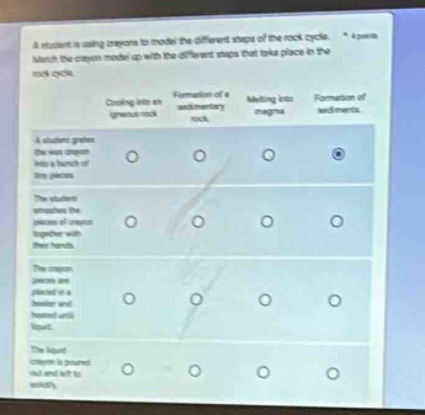
a student is using crayons to model the different steps of the rock cycle. a parts. match the crayon model up with the different steps that take place in the rock cycle. cooling into an igneous rock, formation of a sedimentary rock, melting into magma, formation of sediments. a student grates the wax crayon into a bunch of tiny pieces. the student smashes the pieces of crayon together in their hands. the crayon pieces are placed in a dish and heated with a bunsen burner. the liquid rock is poured out and left to cool.
Answer
Brief Explanations:
- When a student grinds the rock into tiny pieces, this represents the formation of sediments as rocks are broken down into smaller particles in nature for sediment - rock formation.
- When the student smashes the pieces of paper together in their hands, this is like the process of compaction and cementation which forms sedimentary rock from sediments.
- When the paper pieces are placed in a cup and heated with a lighter, this models melting into magma as heat causes rocks to melt.
- When the liquid rock is poured out and left to cool, this represents cooling into an igneous rock as magma cools and solidifies.
Answer:
- Formation of sediments
- Formation of a sedimentary rock
- Melting into magma
- Cooling into an igneous rock