the students were then given three different rock samples, labeled a, b, and c, to test with vinegar. the…
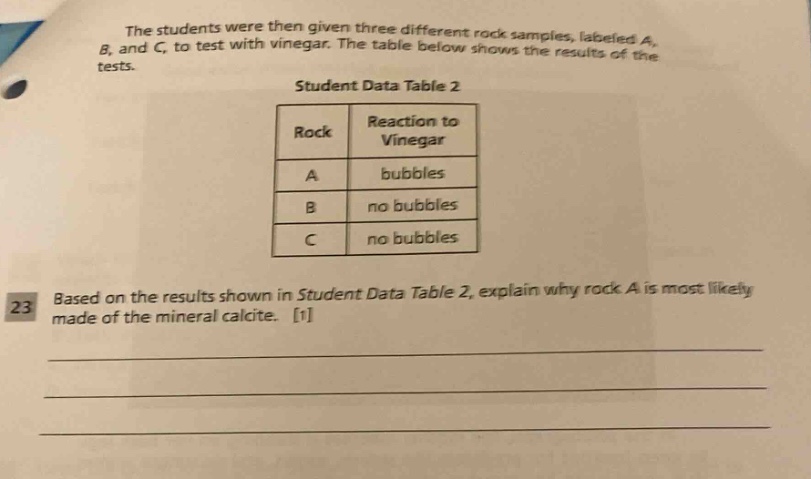
the students were then given three different rock samples, labeled a, b, and c, to test with vinegar. the table below shows the results of the tests. student data table 2 rock reaction to vinegar a bubbles b no bubbles c no bubbles 23 based on the results shown in student data table 2, explain why rock a is most likely made of the mineral calcite. 1
Answer
Brief Explanations:
Calcite reacts with vinegar to produce carbon - dioxide gas, which appears as bubbles. Rock A shows bubbling when tested with vinegar, while rocks B and C do not. This bubbling reaction is characteristic of calcite.
Answer:
Rock A is most likely made of calcite because it shows a bubbling reaction when tested with vinegar, and calcite reacts with vinegar to produce carbon - dioxide gas in the form of bubbles.