4. how can tariffs protect domestic industries?\n a. by increasing the demand for foreign products\n b. by…
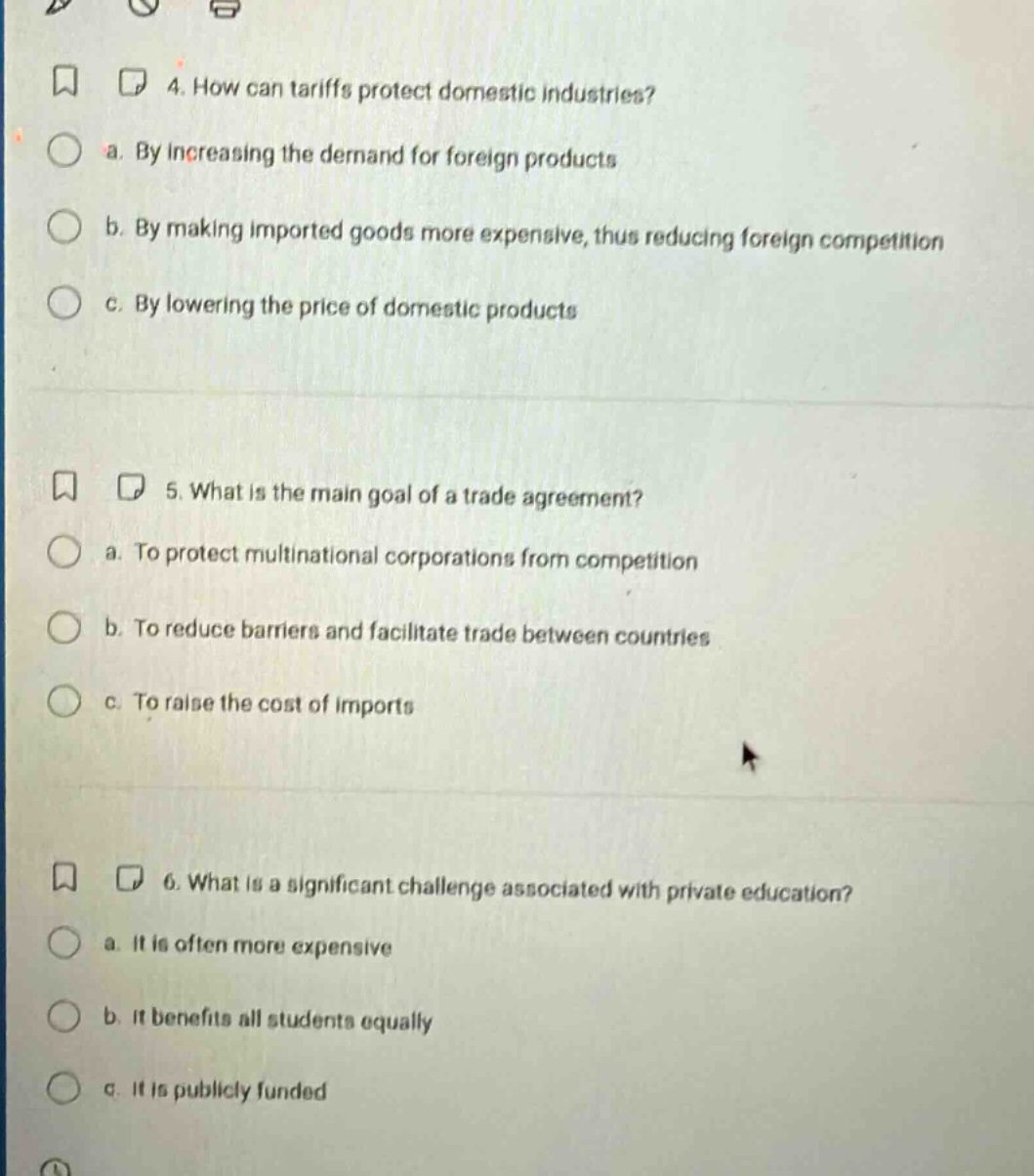
4. how can tariffs protect domestic industries?\n a. by increasing the demand for foreign products\n b. by making imported goods more expensive, thus reducing foreign competition\n c. by lowering the price of domestic products\n\n5. what is the main goal of a trade agreement?\n a. to protect multinational corporations from competition\n b. to reduce barriers and facilitate trade between countries\n c. to raise the cost of imports\n\n6. what is a significant challenge associated with private education?\n a. it is often more expensive\n b. it benefits all students equally\n c. it is publicly funded
Answer
Brief Explanations:
- For question 4: Tariffs are taxes on imports. By making imported goods more costly, domestic consumers may choose domestic - made products instead, reducing foreign competition for domestic industries.
- For question 5: Trade agreements aim to promote trade by reducing barriers like tariffs and quotas between countries.
- For question 6: Private education is typically funded by tuition and private sources, making it more expensive compared to public education.
Answer:
- b. By making imported goods more expensive, thus reducing foreign competition
- b. To reduce barriers and facilitate trade between countries
- a. It is often more expensive