3 the text says, \in south america and africa, fossils of another ancient reptile, cynognathus, turned up…
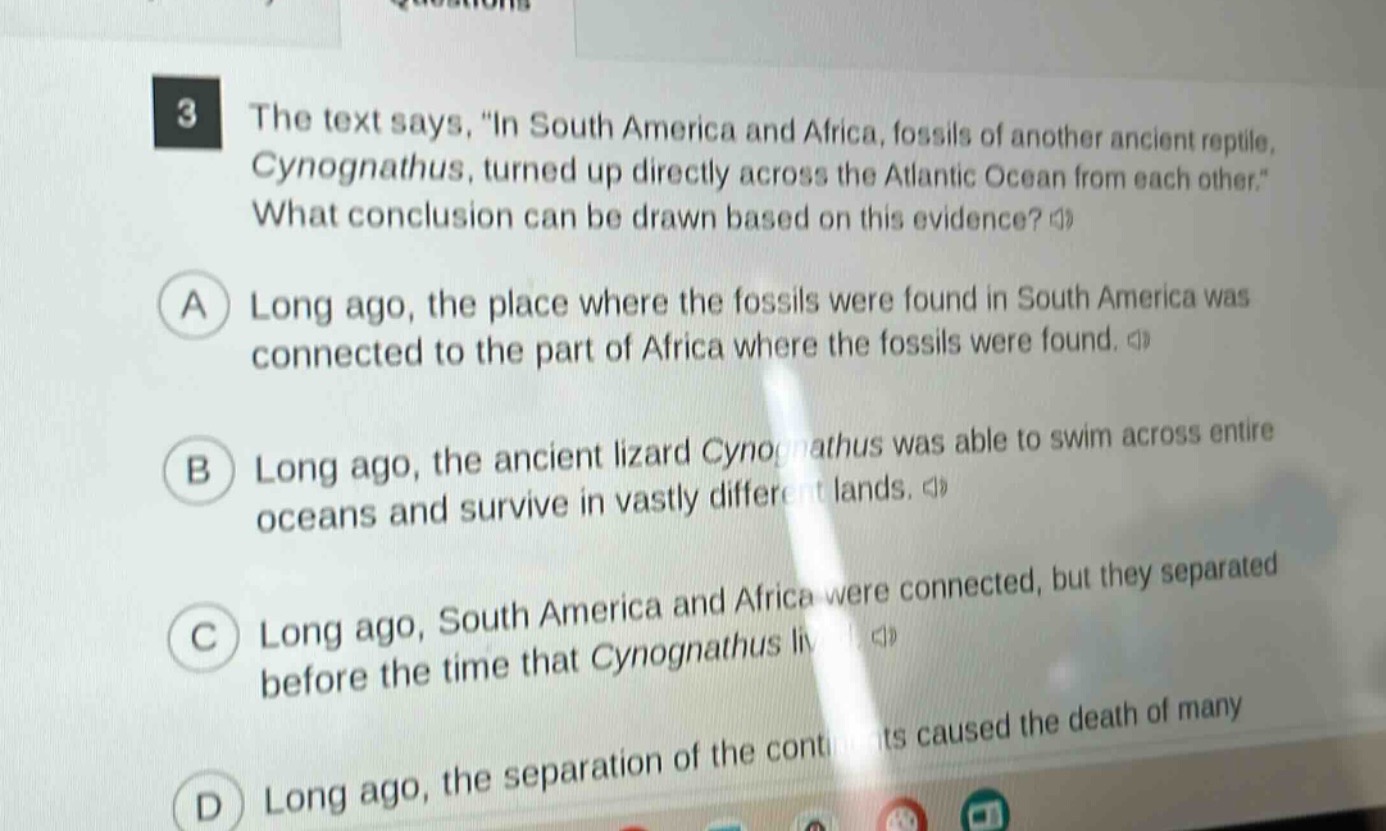
3 the text says, \in south america and africa, fossils of another ancient reptile, cynognathus, turned up directly across the atlantic ocean from each other.\ what conclusion can be drawn based on this evidence? a long ago, the place where the fossils were found in south america was connected to the part of africa where the fossils were found. b long ago, the ancient lizard cynognathus was able to swim across entire oceans and survive in vastly different lands. c long ago, south america and africa were connected, but they separated before the time that cynognathus lived. d long ago, the separation of the continents caused the death of many
Answer
Brief Explanations:
Fossils of the same ancient reptile Cynognathus are found directly across the Atlantic Ocean in South America and Africa. This is strong evidence for the theory of continental drift. It is more likely that the continents were once connected rather than the reptile being able to swim across the entire ocean.
Answer:
A. Long ago, the place where the fossils were found in South America was connected to the part of Africa where the fossils were found.