which values do scientists compare when using potassium - argon dating?\n○ the number of stable and unstable…
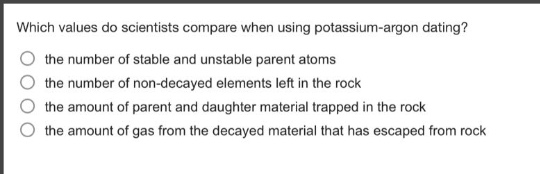
which values do scientists compare when using potassium - argon dating?\n○ the number of stable and unstable parent atoms\n○ the number of non - decayed elements left in the rock\n○ the amount of parent and daughter material trapped in the rock\n○ the amount of gas from the decayed material that has escaped from rock
Answer
Brief Explanation:
Potassium - argon dating is a radiometric dating method. It works by comparing the amount of the parent isotope (potassium - 40) and the daughter isotope (argon - 40) that are trapped within a rock. The parent isotope decays over time into the daughter isotope, and by measuring their relative amounts, the age of the rock can be determined.
Answer:
the amount of parent and daughter material trapped in the rock