viewpoints on vaccines todd cotterman and janice rowter (viewpoint 1) vaccines: a necessity for a healthy…
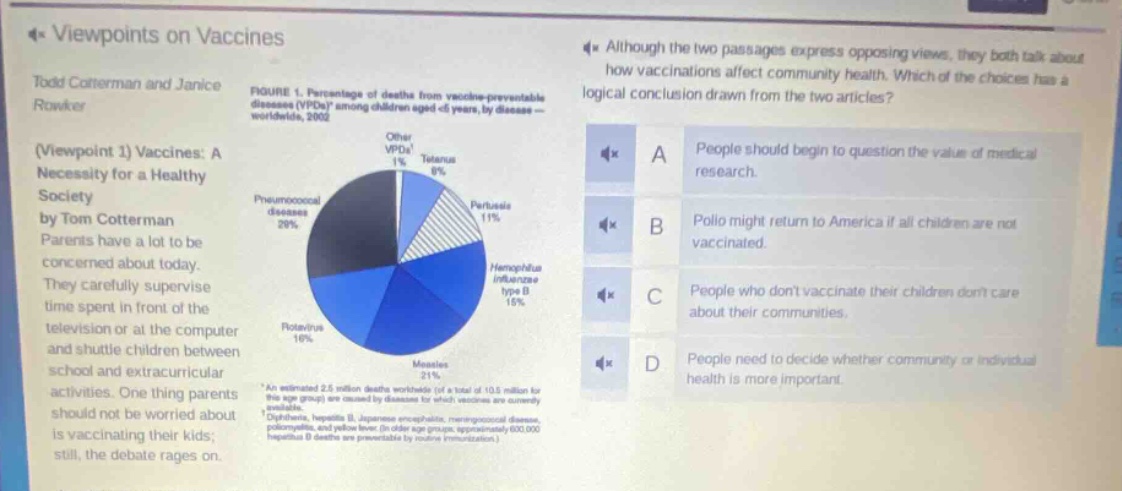
viewpoints on vaccines todd cotterman and janice rowter (viewpoint 1) vaccines: a necessity for a healthy society by tom cotterman parents have a lot to be concerned about today. they carefully supervise time spent in front of the television or at the computer and shuttle children between school and extracurricular activities. one thing parents should not be worried about is vaccinating their kids; still, the debate rages on. although the two passages express opposing views, they both talk about how vaccinations affect community health. which of the choices has a logical conclusion drawn from the two articles? a people should begin to question the value of medical research. b polio might return to america if all children are not vaccinated. c people who dont vaccinate their children dont care about their communities. d people need to decide whether community or individual health is more important. figure 1. percentage of deaths from vaccine - preventable diseases (vpds) among children aged <5 years, by disease worldwide, 2002 other vpds 1% tetanus 8% pertussis 11% haemophilus influenzae type b 19% measles 21% rotavirus 19% pneumococcal diseases 29% *an estimated 2.6 million deaths worldwide (of a total of 10.6 million for this age group) are caused by diseases for which vaccines are currently available. (diphtheria, hepatitis b, japanese encephalitis, meningococcal disease, poliomyelitis, and yellow fever. in older age groups, approximately 600,000 hepatitis b deaths are preventable by routine immunization.)
Answer
Brief Explanations:
The passage discusses the impact of vaccinations on community health. Option B is a logical conclusion as it relates to the potential consequences of lack - of vaccination on a disease (polio) returning to a community (America). Option A is too broad and not directly related to the main topic of vaccinations and community health. Option C makes an unfounded assumption about non - vaccinating parents' care for the community. Option D is more of a general statement rather than a conclusion drawn from the articles about the specific impact of vaccinations on community health.
Answer:
B. Polio might return to America if all children are not vaccinated.