written response questions\n1. describe a time when you had to make an ethical decision (either personally…
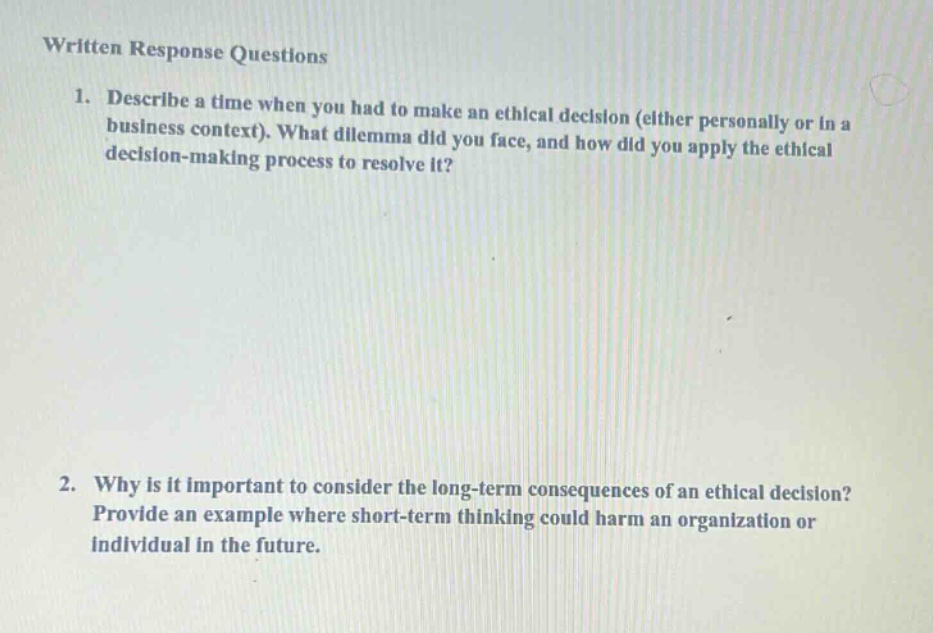
written response questions\n1. describe a time when you had to make an ethical decision (either personally or in a business context). what dilemma did you face, and how did you apply the ethical decision - making process to resolve it?\n2. why is it important to consider the long - term consequences of an ethical decision? provide an example where short - term thinking could harm an organization or individual in the future.
Answer
Brief Explanations:
- For the first question, one could describe a situation like a businessperson deciding whether to cut corners on product - quality to increase short - term profits. The dilemma is between immediate financial gain and long - term reputation. The ethical decision - making process might involve identifying stakeholders (customers, employees, shareholders), evaluating options (maintain quality vs. cut corners), and choosing the option that maximizes overall well - being.
- Considering long - term consequences of ethical decisions is important because short - term thinking can lead to negative impacts down the line. For example, a company that uses unethical marketing practices to boost short - term sales may face legal issues, loss of customer trust, and damage to its brand in the long run.
Answer:
- One possible response: In a business context, I once worked for a company that was under pressure to meet quarterly sales targets. A sales manager proposed offering false discounts to customers to boost sales. The dilemma was between achieving short - term sales goals and maintaining the company's integrity. I applied the ethical decision - making process by first identifying the stakeholders: customers who would be deceived, the company's reputation, and employees who could face legal issues if the deception was discovered. Then, I evaluated the options: go along with the false discounts or oppose the idea. I chose to oppose it, as maintaining the company's long - term reputation was more important.
- It is important to consider long - term consequences because short - term thinking can lead to unforeseen negative impacts. For example, a construction company that cuts costs by using substandard materials to complete a project quickly may face costly repairs and legal claims in the future when the building's structural integrity is compromised.