6: epidemiology is the study of what causes diseases, injuries, and other physiological damage to humans and…
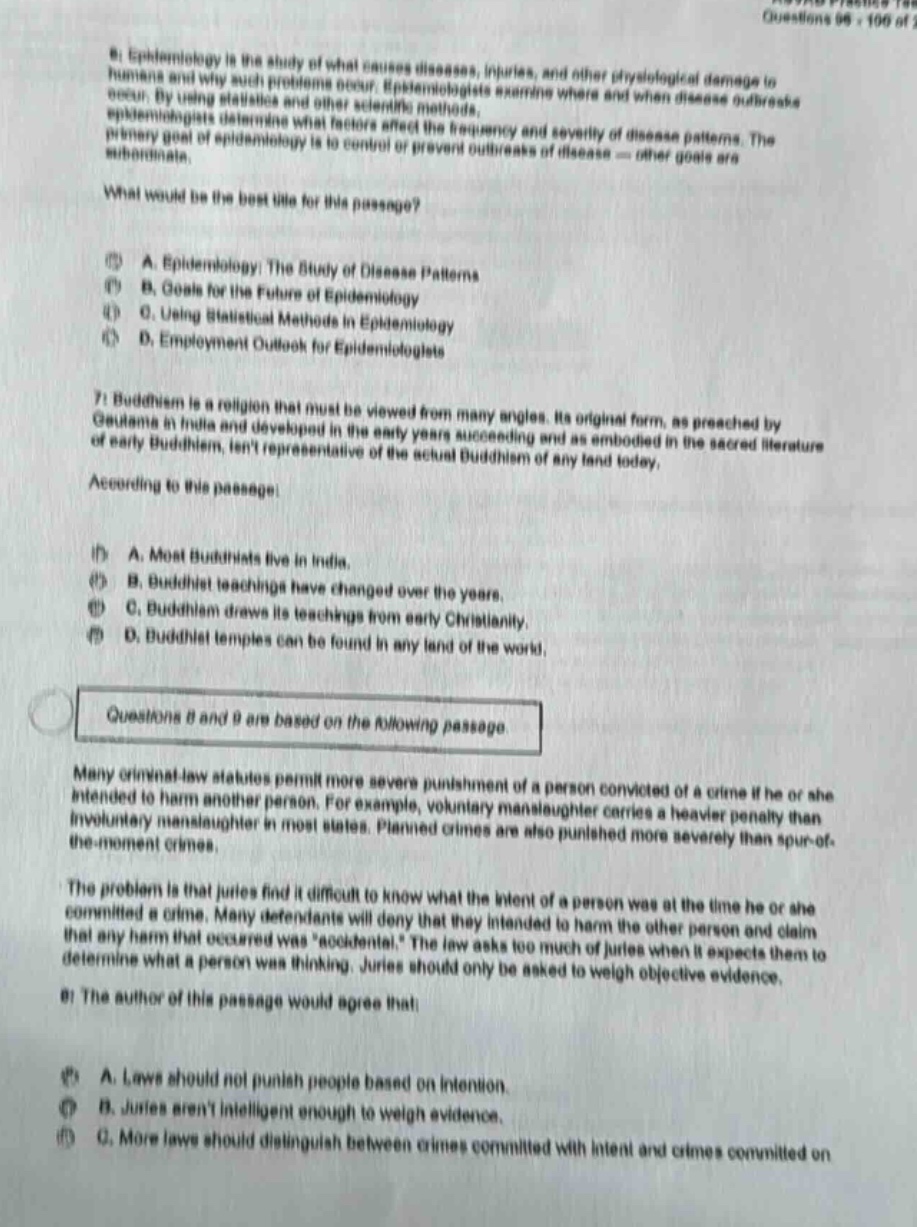
6: epidemiology is the study of what causes diseases, injuries, and other physiological damage to humans and why such problems occur. epidemiologists examine where and when disease outbreaks occur. by using statistics and other scientific methods, epidemiologists determine what factors affect the frequency and severity of disease patterns. the primary goal of epidemiology is to control or prevent outbreaks of disease - other goals are subordinate. what would be the best title for this passage? a. epidemiology: the study of disease patterns b. goals for the future of epidemiology c. using statistical methods in epidemiology d. employment outlook for epidemiologists 7: buddhism is a religion that must be viewed from many angles. its original form, as preached by gautama in india and developed in the early years succeeding and as embodied in the sacred literature of early buddhism, isnt representative of the actual buddhism of any land today. according to this passage: a. most buddhists live in india. b. buddhist teachings have changed over the years. c. buddhism draws its teachings from early christianity. d. buddhist temples can be found in any land of the world. questions 8 and 9 are based on the following passage. many criminal - law statutes permit more severe punishment of a person convicted of a crime if he or she intended to harm another person. for example, voluntary manslaughter carries a heavier penalty than involuntary manslaughter in most states. planned crimes are also punished more severely than spur - of - the - moment crimes. the problem is that juries find it difficult to know what the intent of a person was at the time he or she committed a crime. many defendants will deny that they intended to harm the other person and claim that any harm that occurred was \accidental.\ the law asks too much of juries when it expects them to determine what a person was thinking. juries should only be asked to weigh objective evidence. 8: the author of this passage would agree that: a. laws should not punish people based on intention. b. juries arent intelligent enough to weigh evidence. c. more laws should distinguish between crimes committed with intent and crimes committed on
Answer
Brief Explanations:
- For the first question about epidemiology, the passage mainly introduces what epidemiology is and its study - disease patterns. Option A best summarizes this.
- For the second question about Buddhism, the passage mentions that its original form is not representative of actual Buddhism today, indicating changes over time, so Option B is correct.
- For the third question about criminal - law, the author argues that juries should only weigh objective evidence and that the law asking them to determine intent is too much, suggesting laws should not punish based on intent, so Option A is correct.
Answer:
- A. Epidemiology: The Study of Disease Patterns
- B. Buddhist teachings have changed over the years.
- A. Laws should not punish people based on intention.