big life, tiny living\nthese days, more and more people are abandoning the super - sized life and embracing…
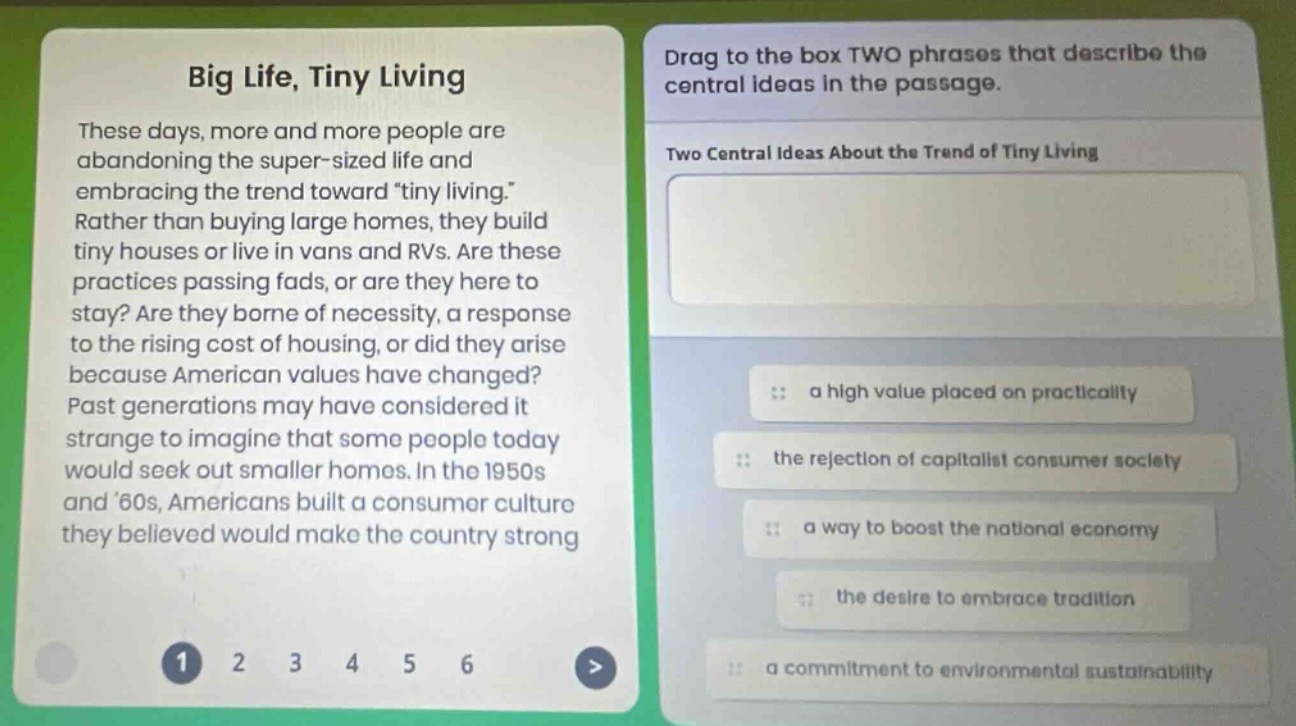
big life, tiny living\nthese days, more and more people are abandoning the super - sized life and embracing the trend toward \tiny living.\ rather than buying large homes, they build tiny houses or live in vans and rvs. are these practices passing fads, or are they here to stay? are they borne of necessity, a response to the rising cost of housing, or did they arise because american values have changed? past generations may have considered it strange to imagine that some people today would seek out smaller homes. in the 1950s and 60s, americans built a consumer culture they believed would make the country strong\ndrag to the box two phrases that describe the central ideas in the passage.\ntwo central ideas about the trend of tiny living\na high value placed on practicality\nthe rejection of capitalist consumer society\na way to boost the national economy\nthe desire to embrace tradition\na commitment to environmental sustainability
Answer
Brief Explanations:
The passage discusses people choosing tiny living over large - scale living. Practically, tiny living can be more cost - effective due to housing cost concerns. Also, smaller living spaces often have a lower environmental impact, indicating a commitment to environmental sustainability. There is no mention of boosting the national economy, embracing tradition, or a rejection of capitalist consumer society as central ideas.
Answer:
a high value placed on practicality, a commitment to environmental sustainability