the survey has bias. (a) determine the type of bias. (b) suggest a remedy. a polling organization conducts a…
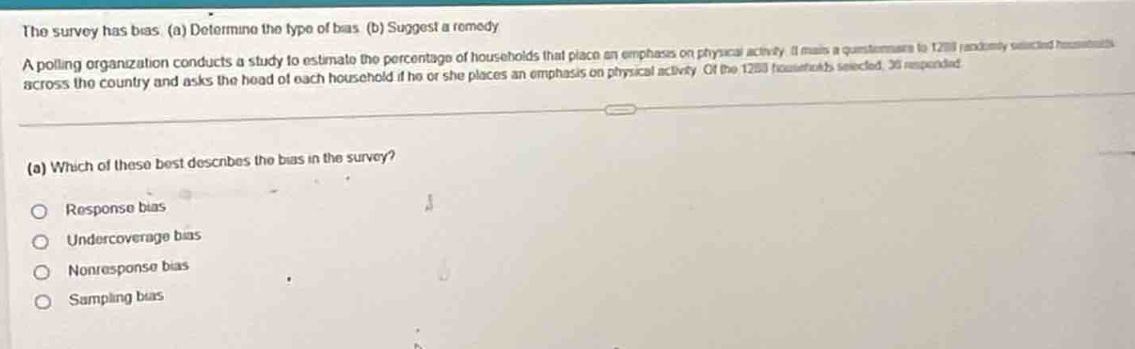
the survey has bias. (a) determine the type of bias. (b) suggest a remedy. a polling organization conducts a study to estimate the percentage of households that place an emphasis on physical activity. it mails a questionnaire to 1200 randomly selected households across the country and asks the head of each household if he or she places an emphasis on physical activity. of the 1200 households selected, 30 responded. (a) which of these best describes the bias in the survey? response bias undercoverage bias nonresponse bias sampling bias
Answer
Brief Explanations:
- Response bias: This occurs when respondents answer questions inaccurately. There's no indication of inaccurate answers here.
- Undercoverage bias: The sampling frame likely doesn't represent all households accurately. For example, certain types of households (e.g., those in remote areas, or transient households) may be under - represented in the sample of 1200 households. This is the most likely bias.
- Non - response bias: There's no mention of non - respondents in the problem description.
- Sampling bias: While related to undercoverage, undercoverage specifically points to parts of the population not being included in the sampling frame.
For a remedy, a more comprehensive sampling frame that includes all types of households across the country should be used. This could involve using multiple sources of data to create the sampling frame, such as census data, updated address databases, etc.
Answer:
a. Undercoverage bias b. Use a more comprehensive sampling frame including all types of households across the country.