teaching, nursing, and other professions\nclerical work\nfactory work\nfarming and domestic labor\n0% 10%…
teaching, nursing, and other professions\nclerical work\nfactory work\nfarming and domestic labor\n0% 10% 20% 30% 40% 50%\nwhich answer best interprets the information shown in the graph?\nthe smallest number of women worked in factories.\nthe smallest number of women worked as teachers or nurses.\nthe largest number of women worked as farmers or domestic laborers.\nthe largest number of women worked in factories.
Answer
Brief Explanations:
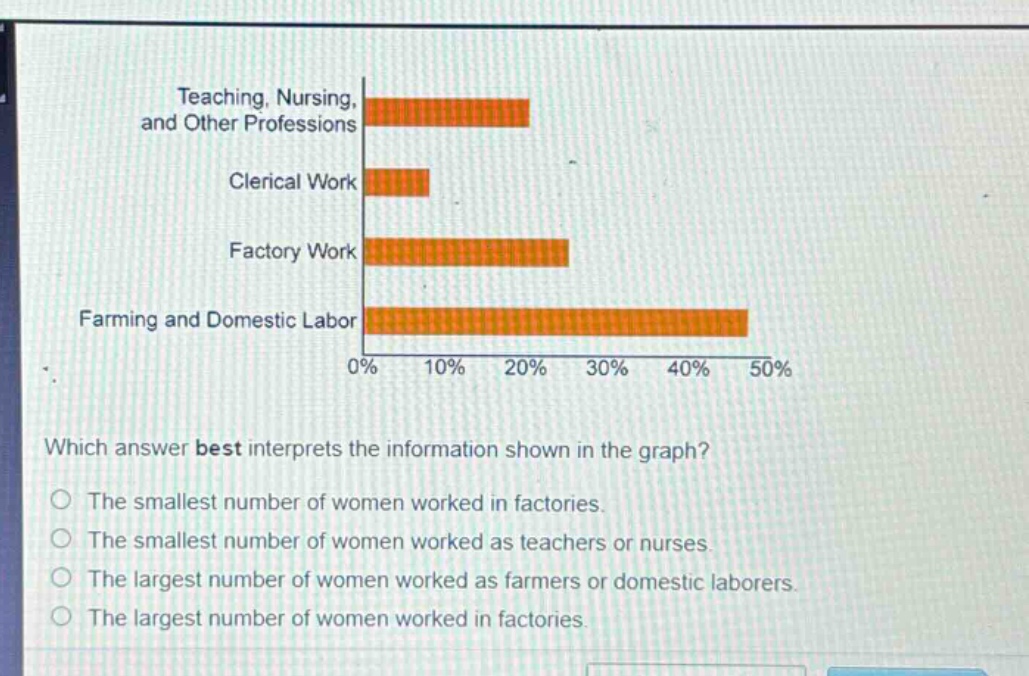
The bar graph displays the distribution of women across different types of employment. To interpret the graph, we compare the lengths of the bars, which represent the percentage of women in each category.
- Teaching, Nursing, and Other Professions: The bar extends to approximately 22%.
- Clerical Work: The bar extends to approximately 8%.
- Factory Work: The bar extends to approximately 25%.
- Farming and Domestic Labor: The bar extends to approximately 45%.
Comparing these percentages:
- The smallest percentage is for Clerical Work (8%).
- The largest percentage is for Farming and Domestic Labor (45%).
Evaluating the given options:
- "The smallest number of women worked in factories." Factory work (25%) is not the smallest; Clerical work (8%) is.
- "The smallest number of women worked as teachers or nurses." Teaching, Nursing, and Other Professions (22%) is not the smallest; Clerical work (8%) is.
- "The largest number of women worked as farmers or domestic laborers." Farming and Domestic Labor (45%) is indeed the largest percentage.
- "The largest number of women worked in factories." Factory work (25%) is not the largest; Farming and Domestic Labor (45%) is.
Therefore, the statement that best interprets the information is that the largest number of women worked as farmers or domestic laborers.
Answer:
The largest number of women worked as farmers or domestic laborers.