a city in the midwestern united states is considering a plan to add roundabout intersections in some high…
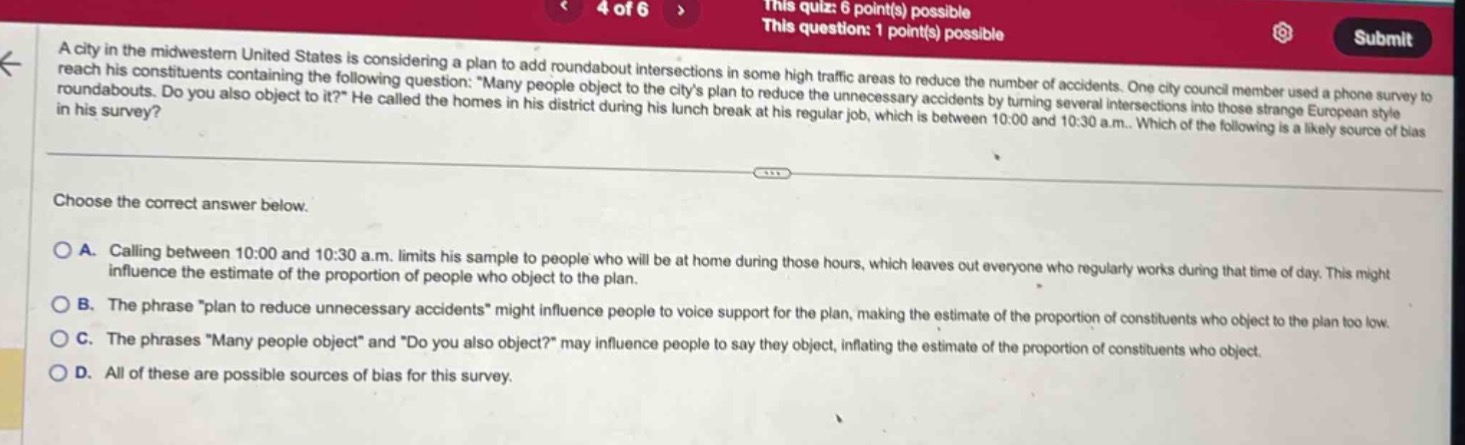
a city in the midwestern united states is considering a plan to add roundabout intersections in some high - traffic areas to reduce the number of accidents. one city council member used a phone survey to reach his constituents containing the following question: “many people object to the city’s plan to reduce the unnecessary accidents by turning several intersections into those strange european style roundabouts. do you also object to it?” he called the homes in his district during his lunch break at his regular job, which is between 10:00 and 10:30 a.m.. which of the following is a likely source of bias in his survey? choose the correct answer below. a. calling between 10:00 and 10:30 a.m. limits his sample to people who will be at home during those hours, which leaves out everyone who regularly works during that time of day. this might influence the estimate of the proportion of people who object to the plan. b. the phrase “plan to reduce unnecessary accidents” might influence people to voice support for the plan, making the estimate of the proportion of constituents who object to the plan too low. c. the phrases “many people object” and “do you also object?” may influence people to say they object, inflating the estimate of the proportion of constituents who object. d. all of these are possible sources of bias for this survey.
Answer
Brief Explanations:
- Option A: Sampling only those at - home between 10:00 - 10:30 a.m. creates a non - representative sample as it excludes working people, which can bias results.
- Option B: The phrase "plan to reduce unnecessary accidents" is leading and may make people more likely to support the plan, biasing the proportion of objectors downwards.
- Option C: The phrases "Many people object" and "Do you also object?" are leading and may make people more likely to say they object, biasing the proportion of objectors upwards. Since all these factors can introduce bias, all are possible sources of bias.
Answer:
D. All of these are possible sources of bias for this survey.