identify the sampling techniques used, and discuss potential sources of bias (if any). explain.\nin 1965…
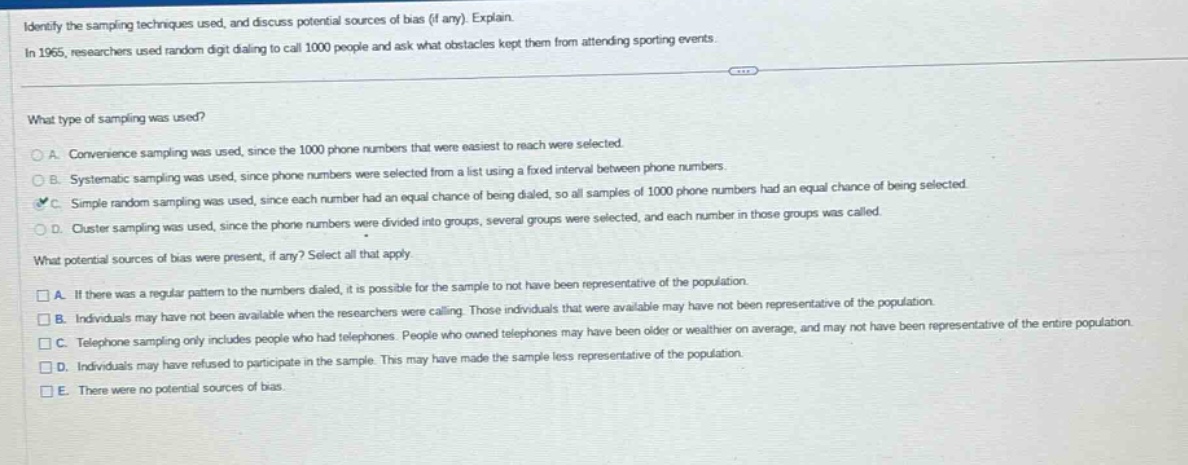
identify the sampling techniques used, and discuss potential sources of bias (if any). explain.\nin 1965, researchers used random - digit dialing to call 1000 people and ask what obstacles kept them from attending sporting events.\nwhat type of sampling was used?\na. convenience sampling was used, since the 1000 phone numbers that were easiest to reach were selected.\nb. systematic sampling was used, since phone numbers were selected from a list using a fixed interval between phone numbers.\nc. simple random sampling was used, since each number had an equal chance of being dialed, so all samples of 1000 phone numbers had an equal chance of being selected.\nd. cluster sampling was used, since the phone numbers were divided into groups, several groups were selected, and each number in those groups was called.\nwhat potential sources of bias were present, if any? select all that apply.\na. if there was a regular pattern to the numbers dialed, it is possible for the sample to not have been representative of the population.\nb. individuals may have not been available when the researchers were calling. those individuals that were available may have not been representative of the population.\nc. telephone sampling only includes people who had telephones. people who owned telephones may have been older or wealthier on average, and may not have been representative of the entire population.\nd. individuals may have refused to participate in the sample. this may have made the sample less representative of the population.\ne. there were no potential sources of bias.
Answer
Brief Explanations:
- Sampling technique: In simple random sampling, every element in the population has an equal chance of being selected. Here, random - digit dialing gives each phone number an equal chance of being dialed, so simple random sampling is used.
- Sources of bias:
- Non - response bias: Individuals may not be available when called (B) or may refuse to participate (D), which can make the sample less representative.
- Under - coverage bias: Telephone sampling only includes people with telephones. In 1965, not everyone had a telephone, and those with phones might have different characteristics (e.g., older or wealthier) compared to the whole population (C). Also, if there was a non - random pattern in the dialed numbers, it could lead to a non - representative sample (A).
Answer:
What type of sampling was used? C. Simple random sampling was used, since each number had an equal chance of being dialed, so all samples of 1000 phone numbers had an equal chance of being selected. What potential sources of bias were present, if any? Select all that apply. A. If there was a regular pattern to the numbers dialed, it is possible for the sample to not have been representative of the population. B. Individuals may have not been available when the researchers were calling. Those individuals that were available may have not been representative of the population. C. Telephone sampling only includes people who had telephones. People who owned telephones may have been older or wealthier on average, and may not have been representative of the entire population. D. Individuals may have refused to participate in the sample. This may have made the sample less representative of the population.