identify the sampling techniques used, and discuss potential sources of bias (if any). explain.\nafter a…
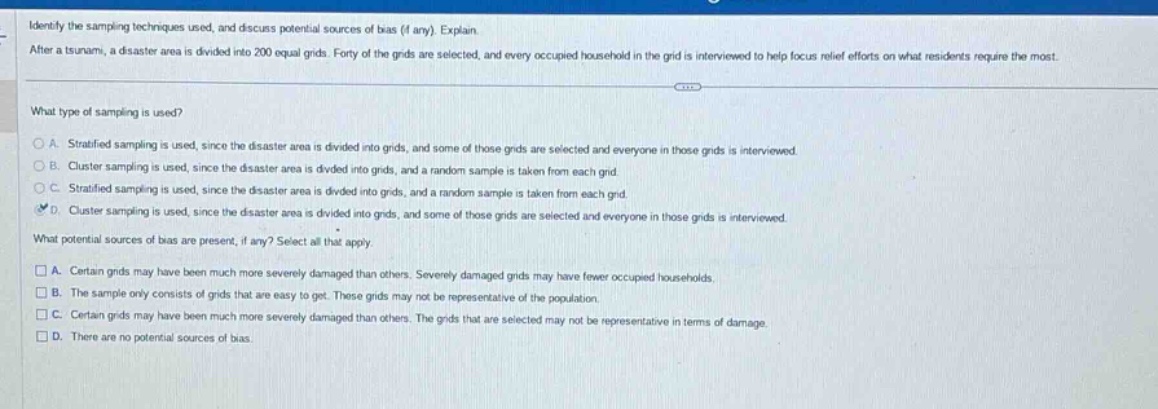
identify the sampling techniques used, and discuss potential sources of bias (if any). explain.\nafter a tsunami, a disaster area is divided into 200 equal grids. forty of the grids are selected, and every occupied household in the grid is interviewed to help focus relief efforts on what residents require the most.\nwhat type of sampling is used?\na. stratified sampling is used, since the disaster area is divided into grids, and some of those grids are selected and everyone in those grids is interviewed.\nb. cluster sampling is used, since the disaster area is divided into grids, and a random sample is taken from each grid.\nc. stratified sampling is used, since the disaster area is divided into grids, and a random sample is taken from each grid.\nd. cluster sampling is used, since the disaster area is divided into grids, and some of those grids are selected and everyone in those grids is interviewed.\nwhat potential sources of bias are present, if any? select all that apply.\na. certain grids may have been much more severely damaged than others. severely damaged grids may have fewer occupied households.\nb. the sample only consists of grids that are easy to get. these grids may not be representative of the population.\nc. certain grids may have been much more severely damaged than others. the grids that are selected may not be representative in terms of damage.\nd. there are no potential sources of bias.
Answer
Brief Explanations:
- Sampling type: In cluster sampling, the population is divided into clusters (here, the disaster - area is divided into grids), and some of these clusters are selected, and all elements within the selected clusters are studied. So, when the disaster area is divided into grids, some grids are selected, and every occupied household in those grids is interviewed, it is cluster sampling.
- Sources of bias:
- Option A: Severely damaged grids may have fewer occupied households, which can lead to a non - representative sample as the needs of less - damaged areas may be over - or under - represented.
- Option C: If the selected grids are not representative in terms of damage, the sample will not accurately reflect the needs of all residents in the disaster area.
Answer:
What type of sampling is used? D. Cluster sampling is used, since the disaster area is divided into grids, and some of those grids are selected and everyone in those grids is interviewed. What potential sources of bias are present, if any? Select all that apply. A. Certain grids may have been much more severely damaged than others. Severely damaged grids may have fewer occupied households. C. Certain grids may have been much more severely damaged than others. The grids that are selected may not be representative in terms of damage.