h. interpret the p - value in the context of the study.\nthere is a 0.58% chance of a type i error.\nthere…
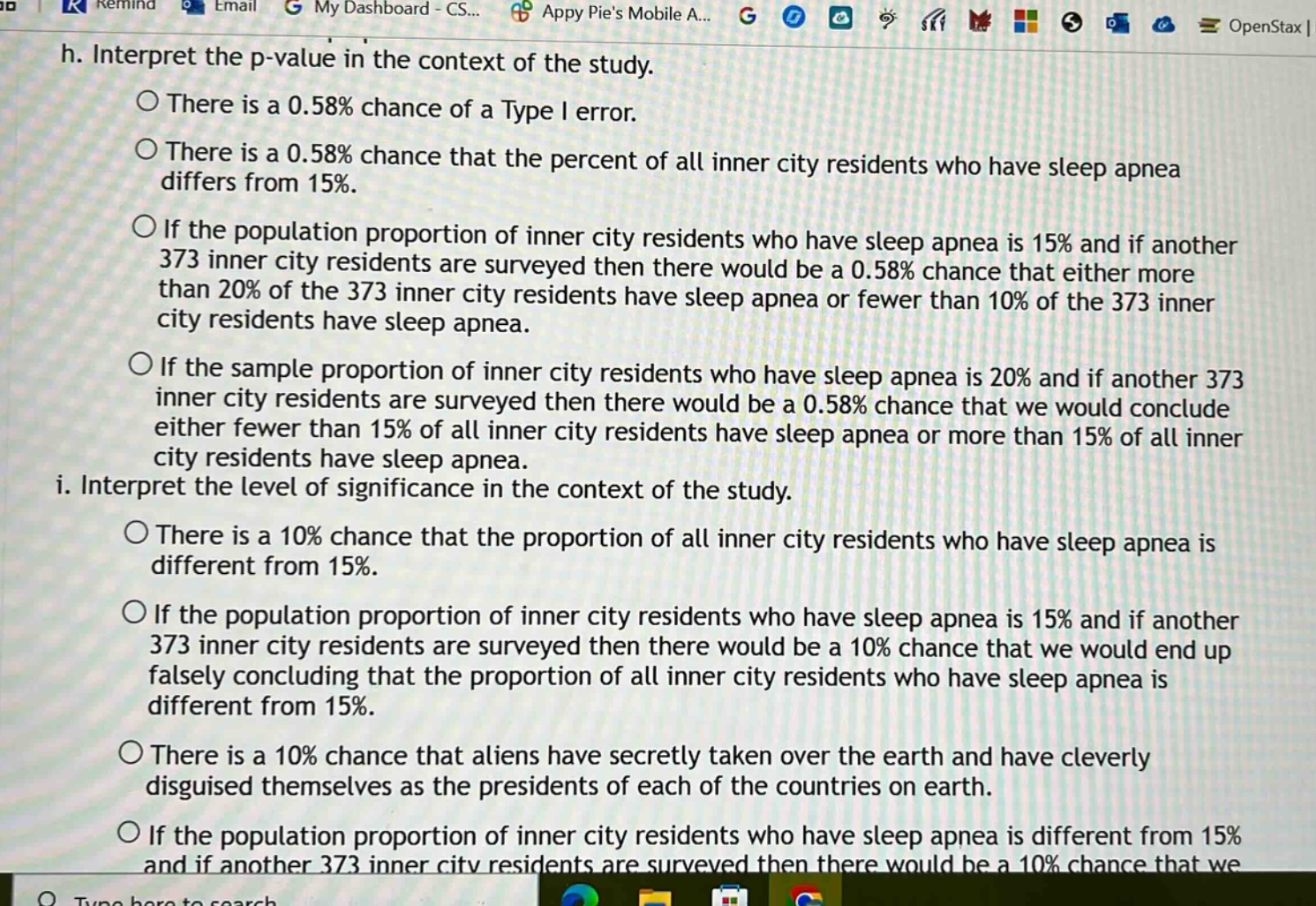
h. interpret the p - value in the context of the study.\nthere is a 0.58% chance of a type i error.\nthere is a 0.58% chance that the percent of all inner city residents who have sleep apnea differs from 15%.\nif the population proportion of inner city residents who have sleep apnea is 15% and if another 373 inner city residents are surveyed then there would be a 0.58% chance that either more than 20% of the 373 inner city residents have sleep apnea or fewer than 10% of the 373 inner city residents have sleep apnea.\nif the sample proportion of inner city residents who have sleep apnea is 20% and if another 373 inner city residents are surveyed then there would be a 0.58% chance that we would conclude either fewer than 15% of all inner city residents have sleep apnea or more than 15% of all inner city residents have sleep apnea.\ni. interpret the level of significance in the context of the study.\nthere is a 10% chance that the proportion of all inner city residents who have sleep apnea is different from 15%.\nif the population proportion of inner city residents who have sleep apnea is 15% and if another 373 inner city residents are surveyed then there would be a 10% chance that we would end up falsely concluding that the proportion of all inner city residents who have sleep apnea is different from 15%.\nthere is a 10% chance that aliens have secretly taken over the earth and have cleverly disguised themselves as the presidents of each of the countries on earth.\nif the population proportion of inner city residents who have sleep apnea is different from 15% and if another 373 inner city residents are surveyed then there would be a 10% chance that we
Answer
Brief Explanations:
- For part h: The p - value is the probability of obtaining results as extreme or more extreme than the observed results, assuming the null hypothesis is true. Here, the null hypothesis likely assumes a population proportion of 15% for sleep - apnea among inner - city residents. The third option correctly interprets it in terms of extreme sample proportions when the null hypothesis population proportion is 15%.
- For part i: The level of significance is the probability of rejecting the null hypothesis when it is true (Type I error). The second option correctly interprets it as the probability of falsely concluding that the population proportion is different from 15% when the true population proportion is 15%.
Answer:
h. If the population proportion of inner city residents who have sleep apnea is 15% and if another 373 inner city residents are surveyed then there would be a 0.58% chance that either more than 20% of the 373 inner city residents have sleep apnea or fewer than 10% of the 373 inner city residents have sleep apnea. i. If the population proportion of inner city residents who have sleep apnea is 15% and if another 373 inner city residents are surveyed then there would be a 10% chance that we would end up falsely concluding that the proportion of all inner city residents who have sleep apnea is different from 15%.