in a large city school system with 27 elementary schools, the school board is considering the adoption of a…
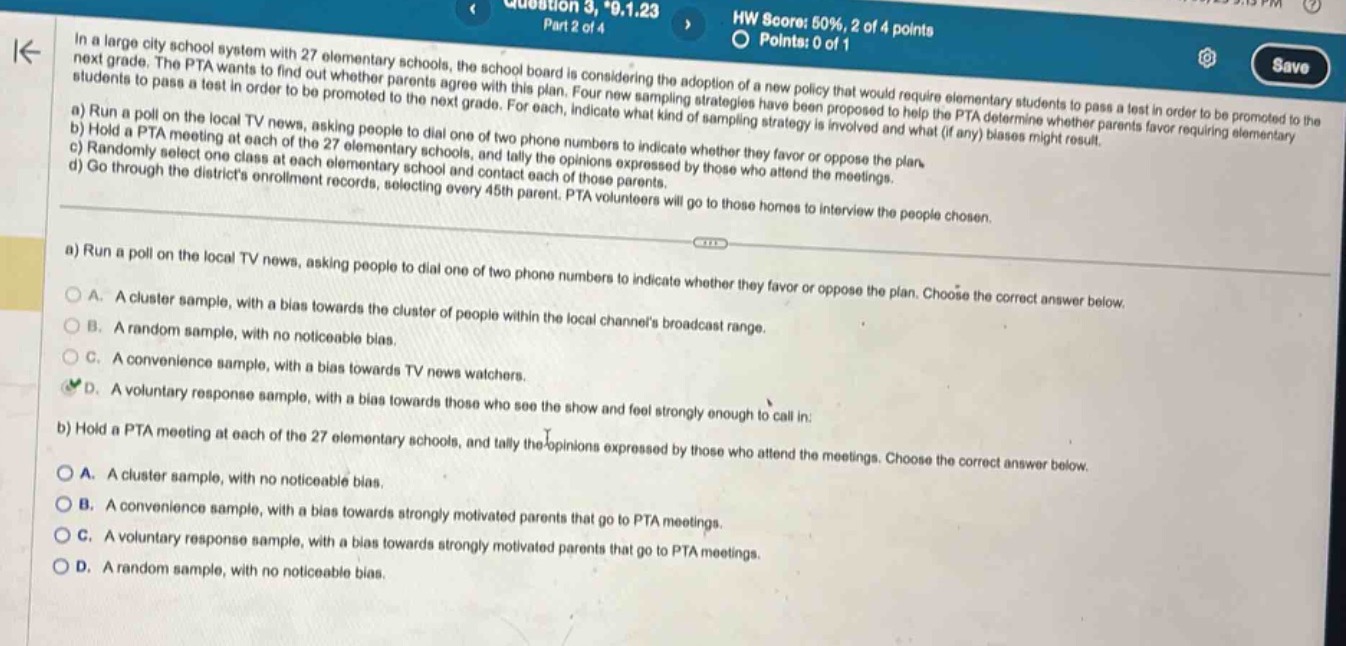
in a large city school system with 27 elementary schools, the school board is considering the adoption of a new policy that would require elementary students to pass a test in order to be promoted to the next grade. the pta wants to find out whether parents agree with this plan. four new sampling strategies have been proposed to help the pta determine whether parents favor requiring elementary students to pass a test in order to be promoted to the next grade. for each, indicate what kind of sampling strategy is involved and what (if any) biases might result.\na) run a poll on the local tv news, asking people to dial one of two phone numbers to indicate whether they favor or oppose the plan.\nb) hold a pta meeting at each of the 27 elementary schools, and tally the opinions expressed by those who attend the meetings.\nc) randomly select one class at each elementary school and contact each of those parents.\nd) go through the districts enrollment records, selecting every 45th parent. pta volunteers will go to those homes to interview the people chosen.\na) run a poll on the local tv news, asking people to dial one of two phone numbers to indicate whether they favor or oppose the plan. choose the correct answer below.\na. a cluster sample, with a bias towards the cluster of people within the local channels broadcast range.\nb. a random sample, with no noticeable bias.\nc. a convenience sample, with a bias towards tv news watchers.\nd. a voluntary response sample, with a bias towards those who see the show and feel strongly enough to call in.\nb) hold a pta meeting at each of the 27 elementary schools, and tally the opinions expressed by those who attend the meetings. choose the correct answer below.\na. a cluster sample, with no noticeable bias.\nb. a convenience sample, with a bias towards strongly motivated parents that go to pta meetings.\nc. a voluntary response sample, with a bias towards strongly motivated parents that go to pta meetings.\nd. a random sample, with no noticeable bias.
Answer
Brief Explanations:
a) When running a poll on local TV news asking people to dial in, it's a voluntary response sample. Those who see the show and feel strongly enough will call in, creating a bias. b) Holding PTA meetings and tallying opinions of attendees is a convenience sample. Parents who attend PTA meetings are likely to be more strongly - motivated, creating a bias.
Answer:
a) D. A voluntary response sample, with a bias towards those who see the show and feel strongly enough to call in. b) B. A convenience sample, with a bias towards strongly motivated parents that go to PTA meetings.