solve the problems.\n1 a city manager wants to know if city residents think the recreation center should…
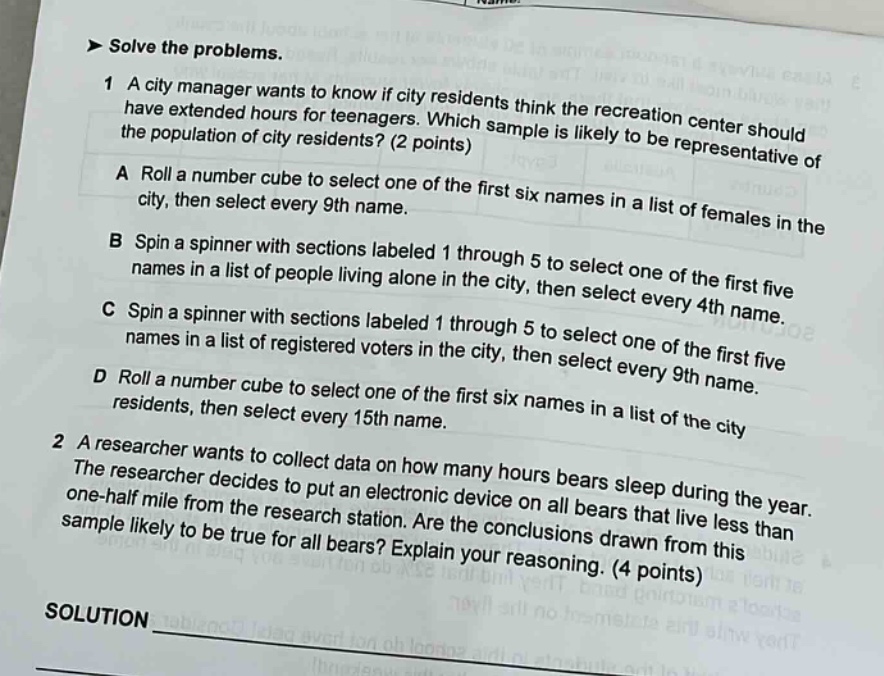
solve the problems.\n1 a city manager wants to know if city residents think the recreation center should have extended hours for teenagers. which sample is likely to be representative of the population of city residents? (2 points)\na roll a number cube to select one of the first six names in a list of females in the city, then select every 9th name.\nb spin a spinner with sections labeled 1 through 5 to select one of the first five names in a list of people living alone in the city, then select every 4th name.\nc spin a spinner with sections labeled 1 through 5 to select one of the first five names in a list of registered voters in the city, then select every 9th name.\nd roll a number cube to select one of the first six names in a list of the city residents, then select every 15th name.\n2 a researcher wants to collect data on how many hours bears sleep during the year. the researcher decides to put an electronic device on all bears that live less than one - half mile from the research station. are the conclusions drawn from this sample likely to be true for all bears? explain your reasoning. (4 points)\nsolution
Answer
Explanation:
Step1: Analyze sampling methods for question 1
A representative sample should be random and cover the entire population. Options A, B, and C are sampling from specific sub - groups (females, people living alone, registered voters) which may not represent all city residents. Option D samples from the general list of city residents randomly (rolling a number cube) and then systematically (selecting every 15th name).
Step2: Analyze sampling for question 2
The researcher is only sampling bears that live less than one - half mile from the research station. Bears that live farther away are not included in the sample. This is a biased sample as it does not represent all bears.
Answer:
- D
- No. The sample only includes bears within half - mile of the research station, excluding bears living farther away, so it is a biased sample and conclusions may not be true for all bears.