caffeine and teens\nk. reiter\n1. teens, more than ever, are depending on caffeinated drinks to get them…
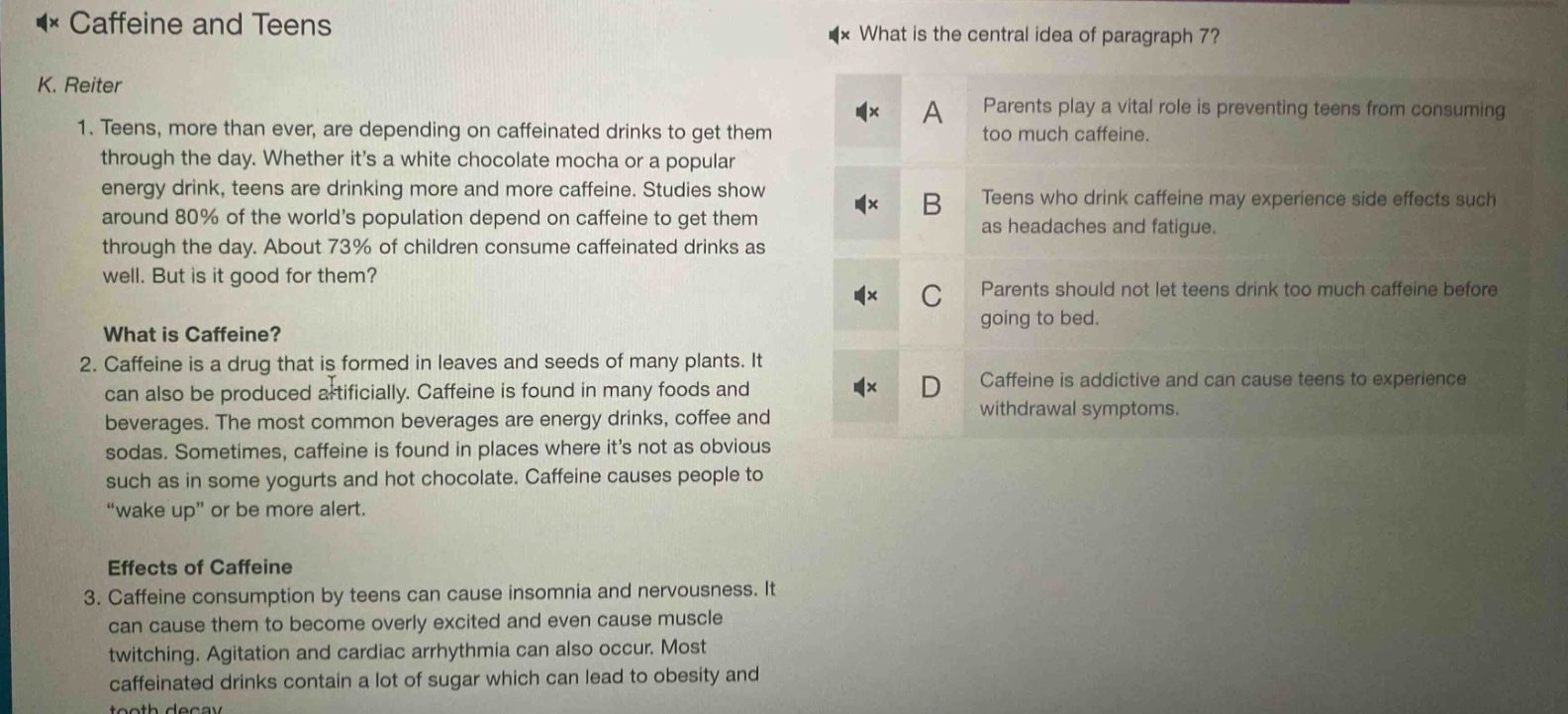
caffeine and teens\nk. reiter\n1. teens, more than ever, are depending on caffeinated drinks to get them through the day. whether its a white chocolate mocha or a popular energy drink, teens are drinking more and more caffeine. studies show around 80% of the worlds population depend on caffeine to get them through the day. about 73% of children consume caffeinated drinks as well. but is it good for them?\nwhat is caffeine?\n2. caffeine is a drug that is formed in leaves and seeds of many plants. it can also be produced artificially. caffeine is found in many foods and beverages. the most common beverages are energy drinks, coffee and sodas. sometimes, caffeine is found in places where its not as obvious such as in some yogurts and hot chocolate. caffeine causes people to “wake up” or be more alert.\neffects of caffeine\n3. caffeine consumption by teens can cause insomnia and nervousness. it can cause them to become overly excited and even cause muscle twitching. agitation and cardiac arrhythmia can also occur. most caffeinated drinks contain a lot of sugar which can lead to obesity and tooth decay.\nwhat is the central idea of paragraph 7?\na parents play a vital role is preventing teens from consuming too much caffeine.\nb teens who drink caffeine may experience side effects such as headaches and fatigue.\nc parents should not let teens drink too much caffeine before going to bed.\nd caffeine is addictive and can cause teens to experience withdrawal symptoms.
Answer
Brief Explanations:
To find the central - idea, we need to analyze the content of paragraph 7 (not shown here, but based on the context and options). Option A focuses on parents' role in prevention, Option B on side - effects of teens drinking caffeine, Option C on pre - bed caffeine consumption, and Option D on caffeine's addictiveness and withdrawal symptoms. Without the actual paragraph 7, we assume based on the overall topic of teens and caffeine side - effects, Option B is most likely as it is a common theme in the given text about teens and caffeine.
Answer:
B. Teens who drink caffeine may experience side effects such as headaches and fatigue.