from discourse on woman\nthe lecturer regarded the announcement of womans achievements, and the giving of…
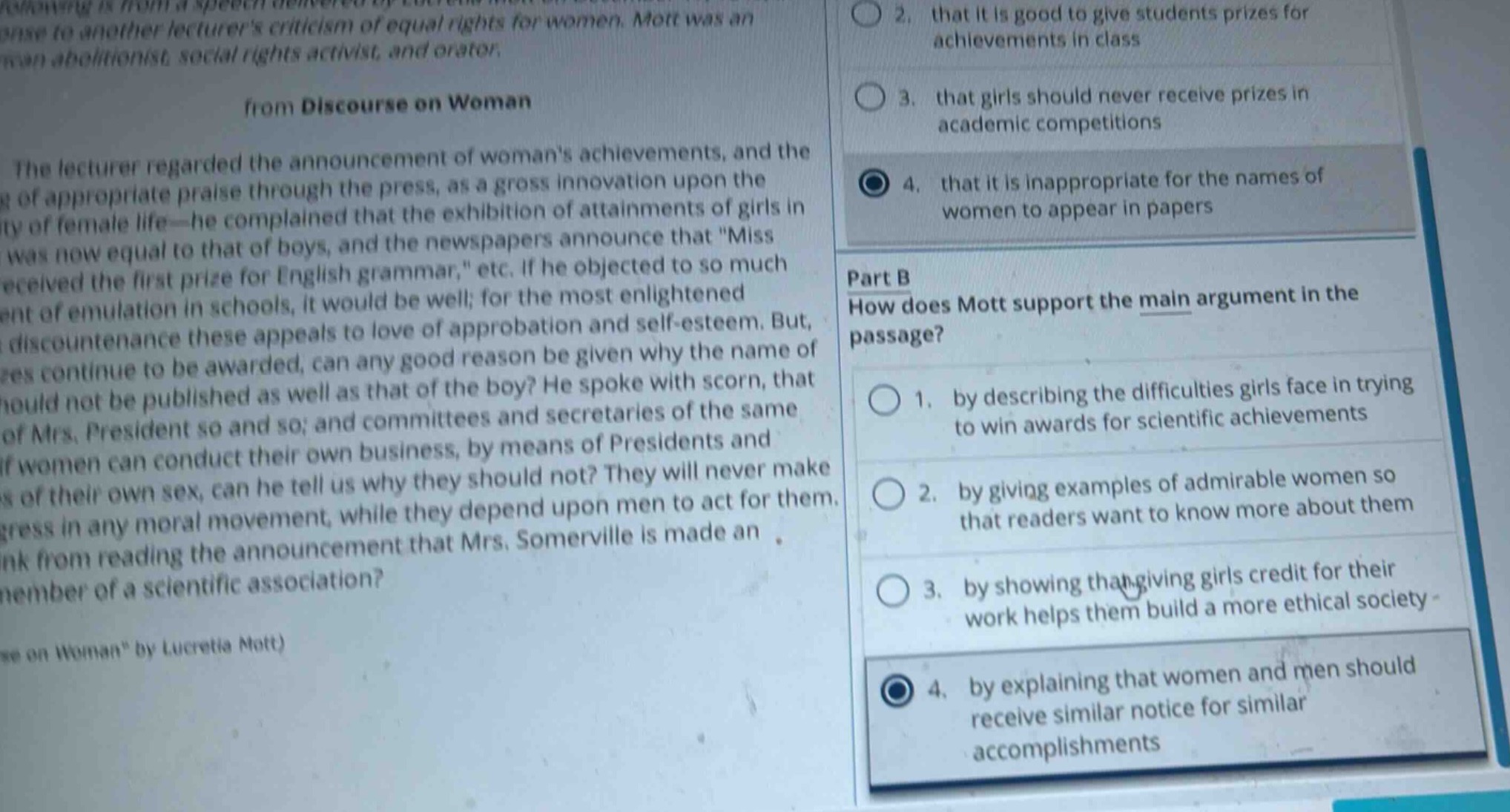
from discourse on woman\nthe lecturer regarded the announcement of womans achievements, and the giving of appropriate praise through the press, as a gross innovation upon the modesty of female life - he complained that the exhibition of attainments of girls in schools was now equal to that of boys, and the newspapers announce that miss so - and - so received the first prize for english grammar, etc. if he objected to so much public encouragement of emulation in schools, it would be well; for the most enlightened men do not discountenance these appeals to love of approbation and self - esteem. but, if prizes continue to be awarded, can any good reason be given why the name of the girl should not be published as well as that of the boy? he spoke with scorn, that the names of female office - holders, such as mrs. president so and so; and committees and secretaries of the same sex, should not be published. if women can conduct their own business, by means of presidents and secretaries of their own sex, can he tell us why they should not? they will never make much progress in any moral movement, while they depend upon men to act for them. do we not think from reading the announcement that mrs. somerville is made an honorary member of a scientific association?\npart b\nhow does mott support the main argument in the passage?\n1. by describing the difficulties girls face in trying to win awards for scientific achievements\n2. by giving examples of admirable women so that readers want to know more about them\n3. by showing that giving girls credit for their work helps them build a more ethical society\n4. by explaining that women and men should receive similar notice for similar accomplishments
Answer
Brief Explanations:
In the passage, Mott argues against the double - standard where boys' achievements are publicized but girls' are not. She posits that if women can conduct business and make achievements like men, they should receive similar recognition. For Part A, the lecturer's view is that it is inappropriate for women's names to appear in papers as he sees it as a "gross innovation". For Part B, Mott supports her main argument by stating that women and men should receive similar notice for similar accomplishments.
Answer:
Part A: 4. that it is inappropriate for the names of women to appear in papers Part B: 4. by explaining that women and men should receive similar notice for similar accomplishments