the effect of these lights is particularly strong because leds are so much brighter than the moon or stars…
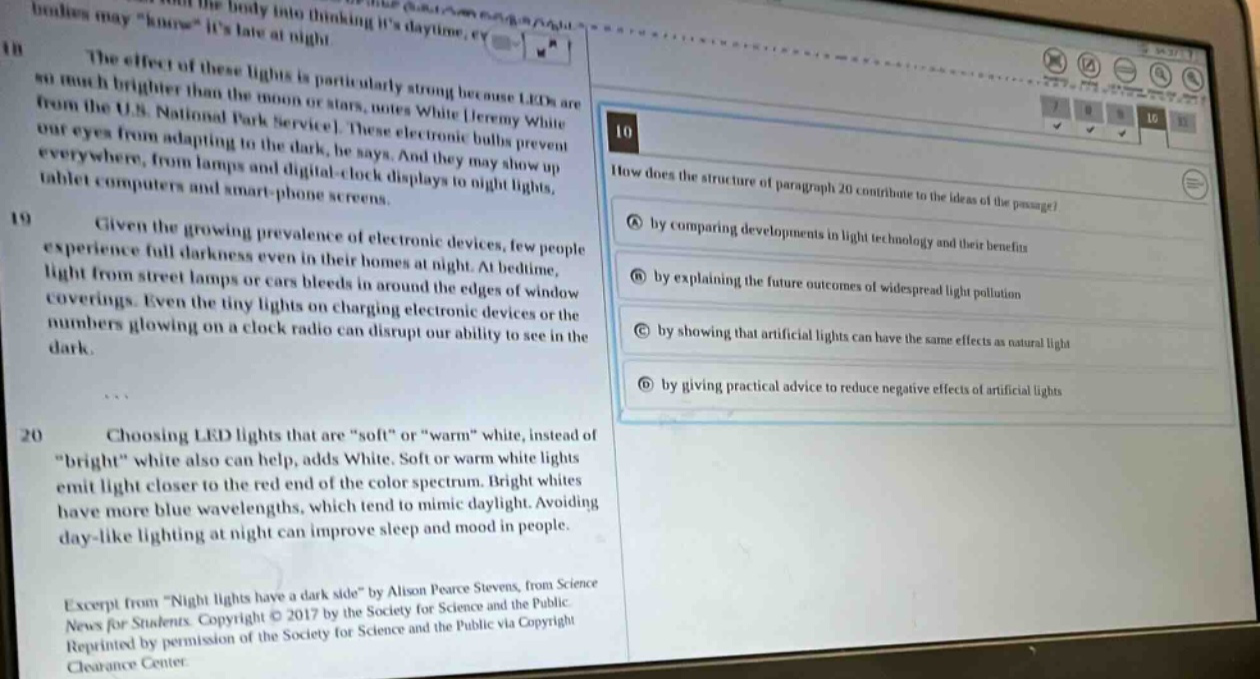
the effect of these lights is particularly strong because leds are so much brighter than the moon or stars, notes white jeremy white from the u.s. national park service. these electronic bulbs prevent our eyes from adapting to the dark, he says. and they may show up everywhere, from lamps and digital - clock displays to night lights, tablet computers and smart - phone screens. 19 given the growing prevalence of electronic devices, few people experience full darkness even in their homes at night. at bedtime, light from street lamps or cars bleeds in around the edges of window coverings. even the tiny lights on charging electronic devices or the numbers glowing on a clock radio can disrupt our ability to see in the dark. 20 choosing led lights that are “soft” or “warm” white, instead of “bright” white also can help, adds white. soft or warm white lights emit light closer to the red end of the color spectrum. bright whites have more blue wavelengths, which tend to mimic daylight. avoiding day - like lighting at night can improve sleep and mood in people. excerpt from “night lights have a dark side” by allison pearce stevens, from science news for students. copyright © 2017 by the society for science and the public. reprinted by permission of the society for science and the public via copyright clearance center. 10 how does the structure of paragraph 20 contribute to the ideas of the passage? a by comparing developments in light technology and their benefits b by explaining the future outcomes of widespread light pollution c by showing that artificial lights can have the same effects as natural light d by giving practical advice to reduce negative effects of artificial lights
Answer
Brief Explanations:
Paragraph 20 gives practical advice (choosing soft - or warm - white LED lights) to reduce the negative effects (disrupting sleep and mood) of artificial lights. It doesn't compare light technology developments and benefits, explain future light pollution outcomes, or show artificial and natural light have the same effects.
Answer:
D. by giving practical advice to reduce negative effects of artificial lights