which of the following is not true of persuasive essays?\nessays frequently use repetition, rhetorical…
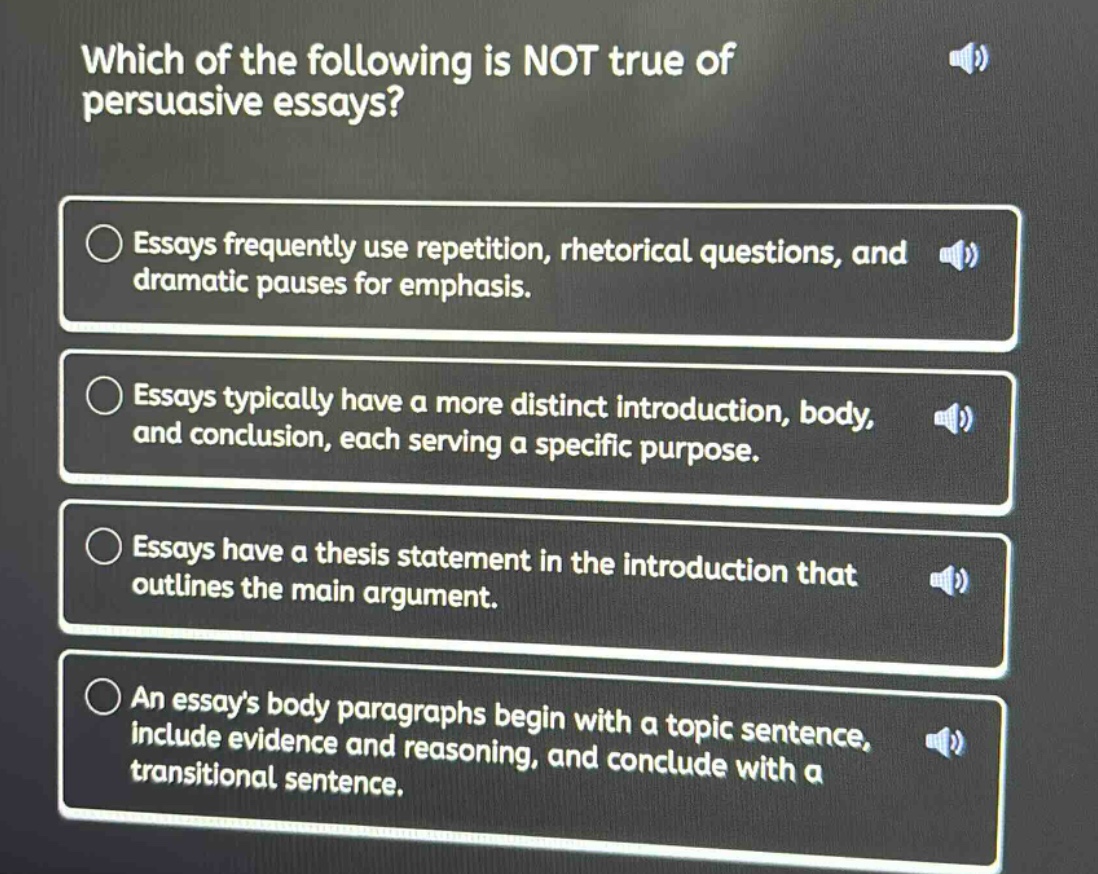
which of the following is not true of persuasive essays?\nessays frequently use repetition, rhetorical questions, and dramatic pauses for emphasis.\nessays typically have a more distinct introduction, body, and conclusion, each serving a specific purpose.\nessays have a thesis statement in the introduction that outlines the main argument.\nan essays body paragraphs begin with a topic sentence, include evidence and reasoning, and conclude with a transitional sentence.
Answer
Answer:
None of the above (assuming all the statements are true about persuasive essays in general). If we must choose one based on common - knowledge about persuasive essays, there is no incorrect statement here as:
- Persuasive essays often use repetition, rhetorical questions, and can imply dramatic pauses (through writing style) for emphasis.
- They typically have a clear introduction, body, and conclusion with specific purposes. The introduction grabs attention and presents the thesis, the body provides evidence and reasoning, and the conclusion summarizes and reinforces the argument.
- A thesis statement in the introduction outlining the main argument is a key feature.
- Body paragraphs usually start with a topic sentence, include evidence and reasoning to support the argument, and end with a transitional sentence to lead to the next paragraph.
Brief Explanations:
All the given statements are standard characteristics of persuasive essays. Repetition, rhetorical questions, and dramatic pauses enhance persuasiveness. A clear structure with introduction, body, and conclusion helps organize the argument. A thesis statement in the introduction defines the main point, and well - structured body paragraphs with topic, evidence, reasoning, and transitional sentences build a strong case.