magic math\n29. which text structure did the author use?\na. cause and effect\nb. compare and contrast\nc…
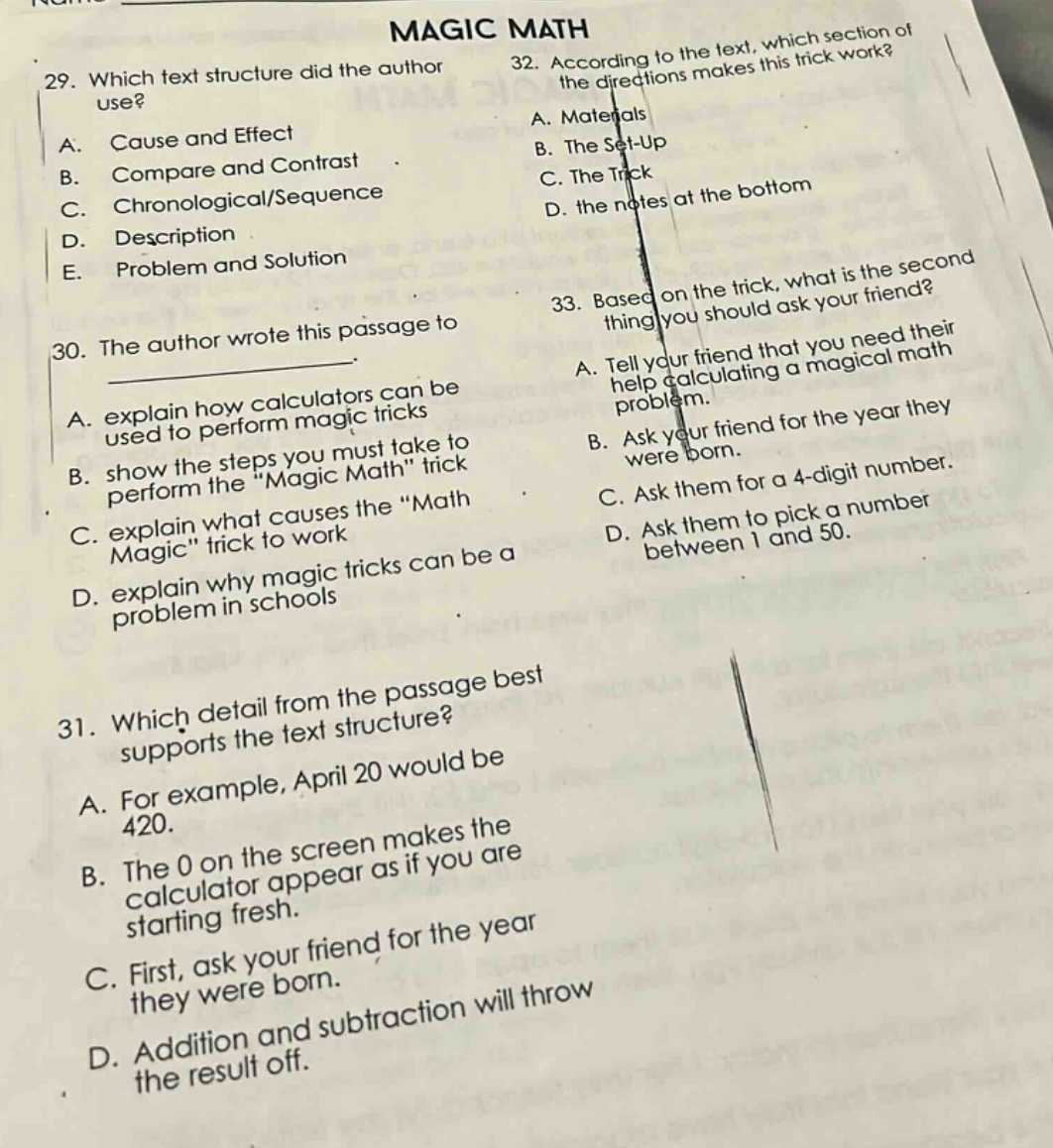
magic math\n29. which text structure did the author use?\na. cause and effect\nb. compare and contrast\nc. chronological/sequence\nd. description\ne. problem and solution\n30. the author wrote this passage to _.\na. explain how calculators can be used to perform magic tricks\nb. show the steps you must take to perform the \magic math\ trick\nc. explain what causes the \math magic\ trick to work\nd. explain why magic tricks can be a problem in schools\n31. which detail from the passage best supports the text structure?\na. for example, april 20 would be 420.\nb. the 0 on the screen makes the calculator appear as if you are starting fresh.\nc. first, ask your friend for the year they were born.\nd. addition and subtraction will throw the result off.\n32. according to the text, which section of the directions makes this trick work?\na. materials\nb. the set - up\nc. the trick\nd. the notes at the bottom\n33. based on the trick, what is the second thing you should ask your friend?\na. tell your friend that you need their help calculating a magical math problem.\nb. ask your friend for the year they were born.\nc. ask them for a 4 - digit number.\nd. ask them to pick a number between 1 and 50.
Answer
Brief Explanations:
Question 29:
The use of "first" and steps in the text indicates a chronological/sequence structure.
Question 30:
The text seems to focus on showing how to perform the "Magic Math" trick.
Question 31:
The word "first" in option C indicates a chronological - sequence structure.
Question 32:
The set - up is what makes the trick work as it provides the initial conditions.
Question 33:
Typically, after asking for the birth - year, the next step is to ask for a number between 1 and 50.
Answer:
- C. Chronological/Sequence
- B. show the steps you must take to perform the "Magic Math" trick
- C. First, ask your friend for the year they were born.
- B. The Set - Up
- D. Ask them to pick a number between 1 and 50.