making your graph work for you: extrapolation\nextrapolation is when we use our graph outside of the testing…
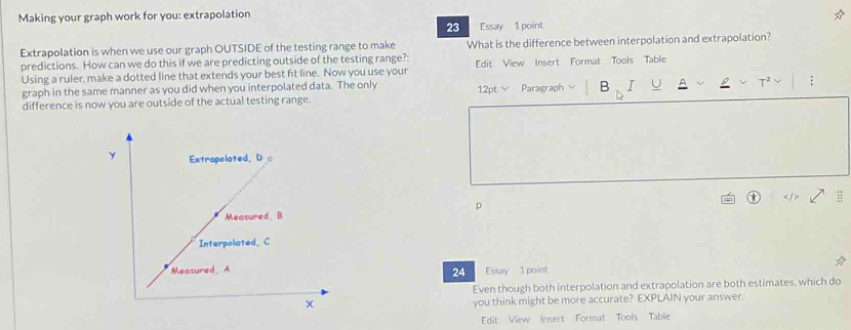
making your graph work for you: extrapolation\nextrapolation is when we use our graph outside of the testing range to make predictions. how can we do this if we are predicting outside of the testing range? using a ruler, make a dotted line that extends your best - fit line. now you use your graph in the same manner as you did when you interpolated data. the only difference is now you are outside of the actual testing range.\n23 essay 1 point\nwhat is the difference between interpolation and extrapolation?\nedit view insert format tools table\n12pt paragraph b i u a 2 t² :\n24 essay 1 point\neven though both interpolation and extrapolation are both estimates, which do you think might be more accurate? explain your answer.\nedit view insert format tools table
Answer
Brief Explanations:
Interpolation estimates values within the known data - range, using existing data points to find intermediate values. Extrapolation estimates values outside the known data - range, extending the trend from the existing data. Since interpolation is based on existing data points within the range, it is generally more accurate as it relies on the established pattern within the data set. Extrapolation assumes the existing trend continues beyond the known data, which may not hold true due to unforeseen factors.
Answer:
- Interpolation estimates values within the range of known data points by using the existing data to find intermediate values. Extrapolation estimates values outside the range of known data points by extending the trend from the existing data.
- Interpolation is generally more accurate. It is based on existing data points within the range and relies on the established pattern in the data set. Extrapolation assumes the trend continues beyond the known data, and unforeseen factors may cause the trend to change.