many people have heard of johnny appleseed, but not everyone realizes he was the real deal, an eccentric and…
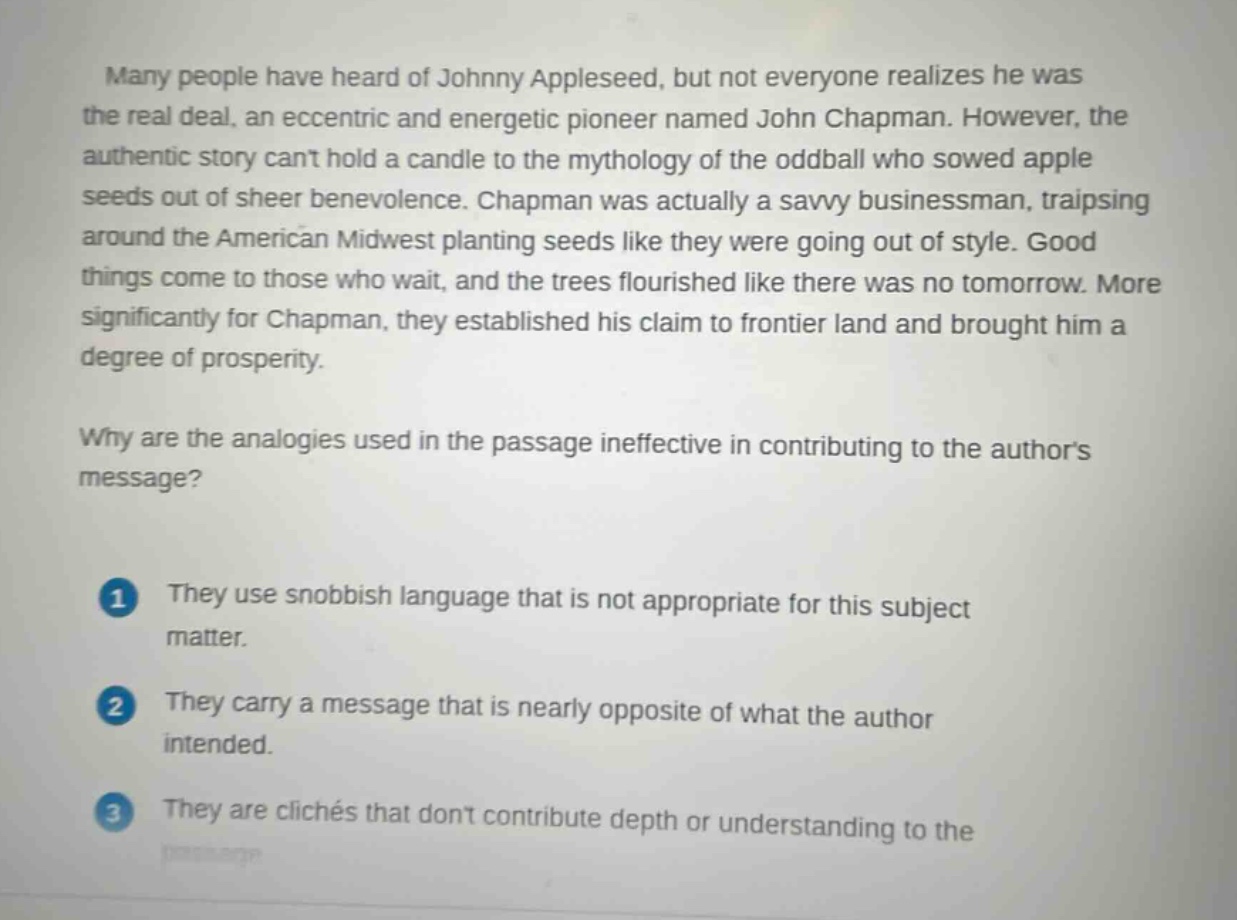
many people have heard of johnny appleseed, but not everyone realizes he was the real deal, an eccentric and energetic pioneer named john chapman. however, the authentic story cant hold a candle to the mythology of the oddball who sowed apple seeds out of sheer benevolence. chapman was actually a savvy businessman, traipsing around the american midwest planting seeds like they were going out of style. good things come to those who wait, and the trees flourished like there was no tomorrow. more significantly for chapman, they established his claim to frontier land and brought him a degree of prosperity.\nwhy are the analogies used in the passage ineffective in contributing to the authors message?\n1 they use snobbish language that is not appropriate for this subject matter.\n2 they carry a message that is nearly opposite of what the author intended.\n3 they are clichés that dont contribute depth or understanding to the
Answer
Brief Explanations:
The phrases "Good things come to those who wait" and "like there was no tomorrow" are common - used clichés. They do not add new insights or depth to the description of John Chapman's story. They are over - used expressions that do not enhance the author's message about Chapman being a savvy businessman.
Answer:
- They are clichés that don't contribute depth or understanding to the