mrs hale: (stiffly) theres a great deal of work to be done on a farm. county attorney: to be sure. and yet…
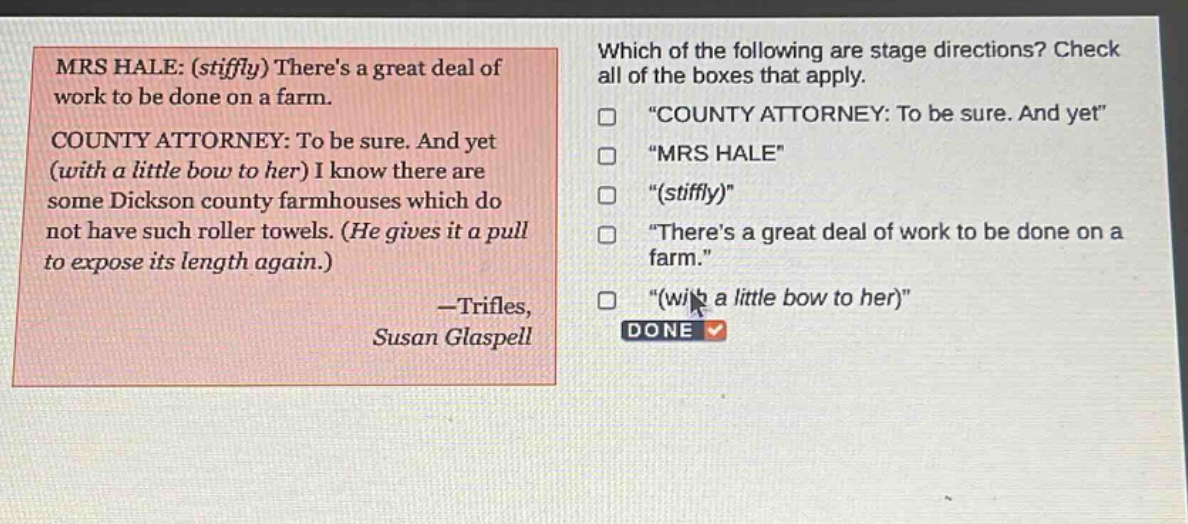
mrs hale: (stiffly) theres a great deal of work to be done on a farm. county attorney: to be sure. and yet (with a little bow to her) i know there are some dickson county farmhouses which do not have such roller towels. (he gives it a pull to expose its length again.) —trifles, susan glaspell which of the following are stage directions? check all of the boxes that apply. \county attorney: to be sure. and yet\ \mrs hale\ \(stiffly)\ \theres a great deal of work to be done on a farm.\ \(with a little bow to her)\ done
Answer
Brief Explanations:
Las indicaciones escénicas describen cómo se deben interpretar las líneas de un guion, incluyendo la actitud, el tono y las acciones del actor. "(stiffly)" y "(with a little bow to her)" son ejemplos de indicaciones escénicas porque describen cómo se deben decir las líneas o cómo se deben realizar las acciones.
Answer:
- "(stiffly)"
- "(with a little bow to her)"