narrative writing: elements\nnarratives commonly share similar elements and characteristics. these elements…
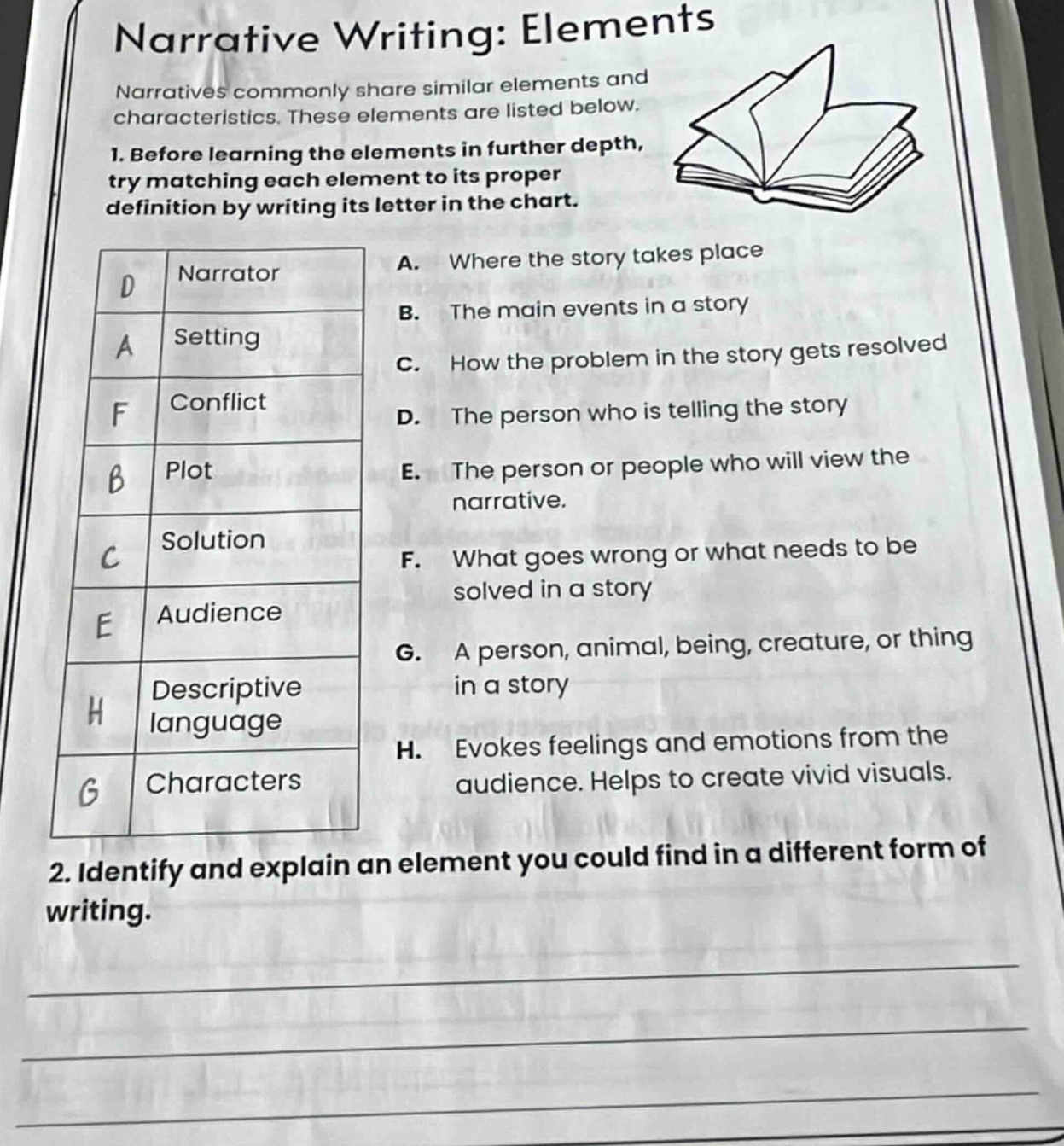
narrative writing: elements\nnarratives commonly share similar elements and characteristics. these elements are listed below.\n1. before learning the elements in further depth, try matching each element to its proper definition by writing its letter in the chart.\n| | |\n|--|--|--|\n| d | narrator | a. where the story takes place\n| a | setting | b. the main events in a story\n| f | conflict | c. how the problem in the story gets resolved\n| b | plot | d. the person who is telling the story\n| c | solution | e. the person or people who will view the narrative.\n| e | audience | f. what goes wrong or what needs to be solved in a story\n| h | descriptive language | g. a person, animal, being, creature, or thing in a story\n| g | characters | h. evokes feelings and emotions from the audience. helps to create vivid visuals.\n2. identify and explain an element you could find in a different form of writing.
Answer
Brief Explanations:
In expository writing, one key element is the thesis statement. It presents the main idea or claim that the writer will explain and support throughout the piece. For example, in an essay about the benefits of exercise, the thesis statement could be "Regular exercise offers numerous physical and mental health benefits." It serves as a roadmap for the reader, guiding them through the writer's argument or explanation.
Answer:
In expository writing, a thesis statement is an important element. It presents the main idea to be explained and supported, acting as a roadmap for the reader.