newspaper article 1: the earthquake struck at 4:30 in the morning. it measured 5.8 on the richter scale…
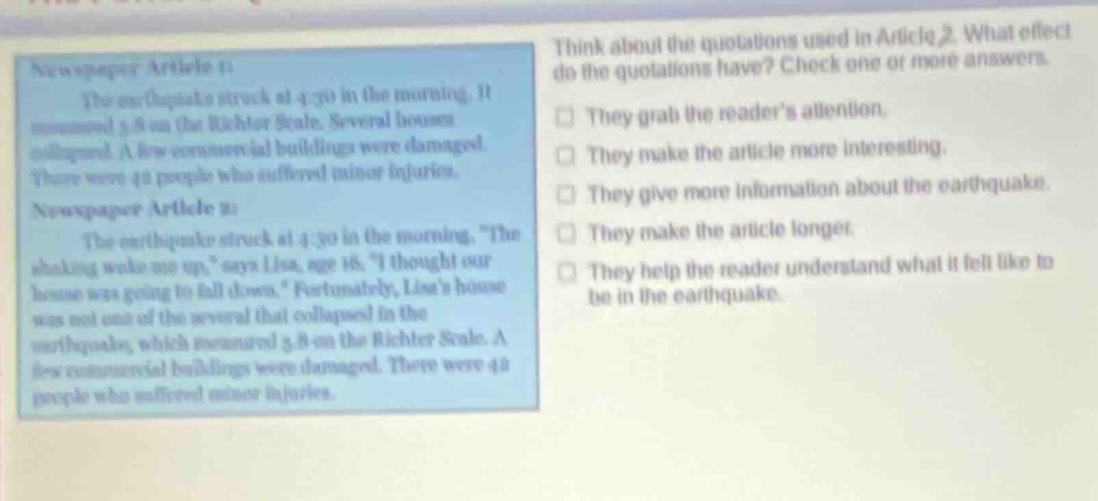
newspaper article 1: the earthquake struck at 4:30 in the morning. it measured 5.8 on the richter scale. several houses collapsed. a few commercial buildings were damaged. there were 42 people who suffered minor injuries. newspaper article 2: the earthquake struck at 4:30 in the morning. “the shaking woke me up,” says lisa, age 16. “i thought our house was going to fall down.” fortunately, lisa’s house was not one of the several that collapsed in the earthquake, which measured 5.8 on the richter scale. a few commercial buildings were damaged. there were 42 people who suffered minor injuries. think about the quotations used in article 2. what effect do the quotations have? check one or more answers. they grab the reader’s attention. they make the article more interesting. they give more information about the earthquake. they make the article longer. they help the reader understand what it felt like to be in the earthquake.
Answer
Brief Explanations:
Quotations in articles can attract readers, add interest, offer more details, and help readers understand experiences. Making an article longer is not a typical positive - intended effect.
Answer:
They grab the reader's attention. They make the article more interesting. They give more information about the earthquake. They help the reader understand what it felt like to be in the earthquake.