what observations can you make from the above image of molten rock from the mantle escaping from the crust…
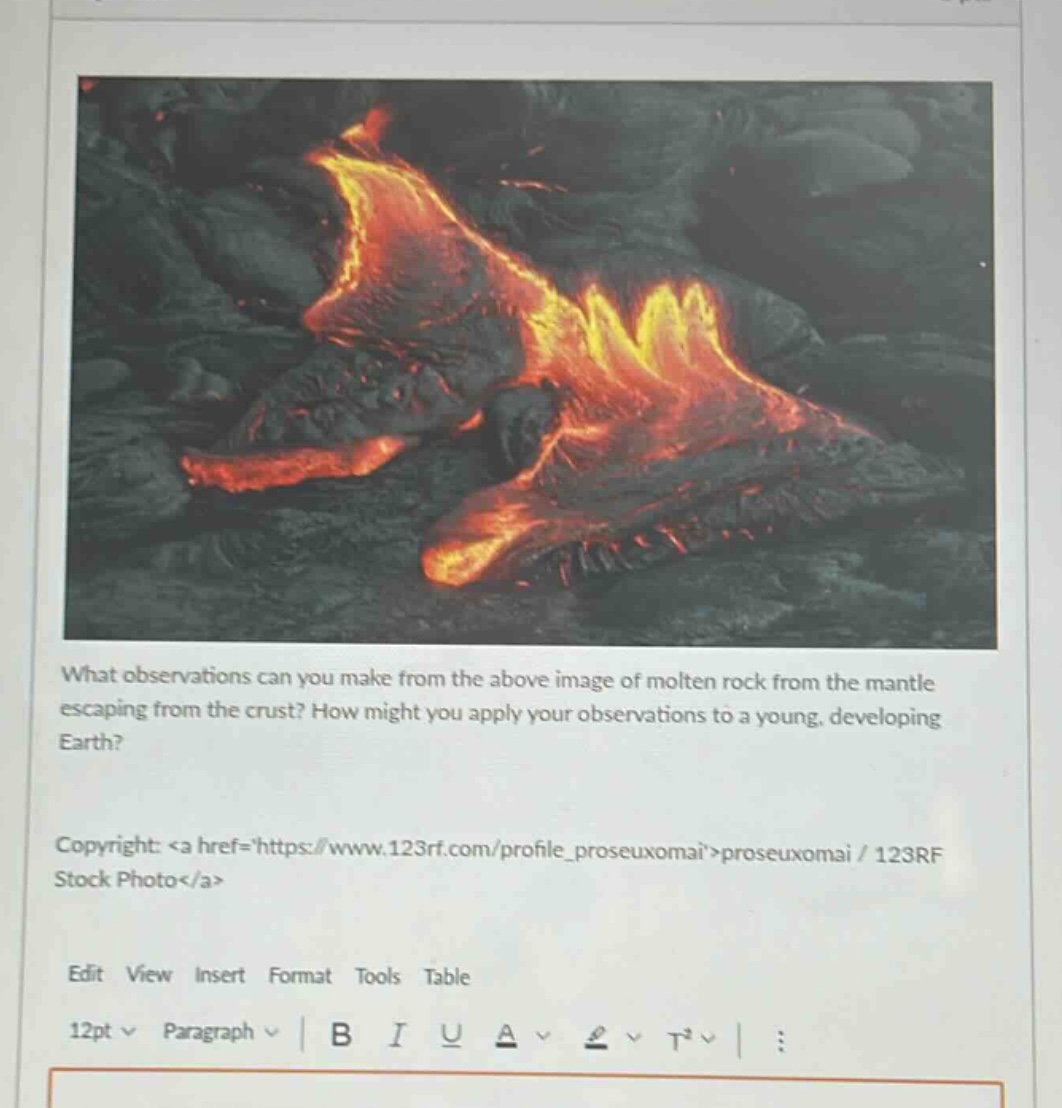
what observations can you make from the above image of molten rock from the mantle escaping from the crust? how might you apply your observations to a young, developing earth? copyright: <a href=https://www.123rf.com/profile_proseuxomai>proseuxomai / 123rf stock photo</a> edit view insert format tools table 12pt paragraph b i u a t² :
Answer
Explanation:
Step1: Describe visual observations
The image shows bright - orange, flowing molten rock (lava) escaping from the crust. The lava has a fluid - like appearance and is surrounded by darker, solidified rock.
Step2: Apply to young Earth
On a young, developing Earth, such lava flows would have been more common. The high - temperature lava would have contributed to the formation of the Earth's crust and the release of gases that formed the early atmosphere. It also indicates a highly active and hot interior during the Earth's early stages.
Answer:
Observations: Bright - orange, flowing molten rock with a fluid appearance, surrounded by darker solidified rock. Application to young Earth: Common lava flows contributed to crust formation and early atmosphere creation, indicating a hot and active interior.