part d this image from the epa shows the projected benefits and costs from the most recent amendments to the…
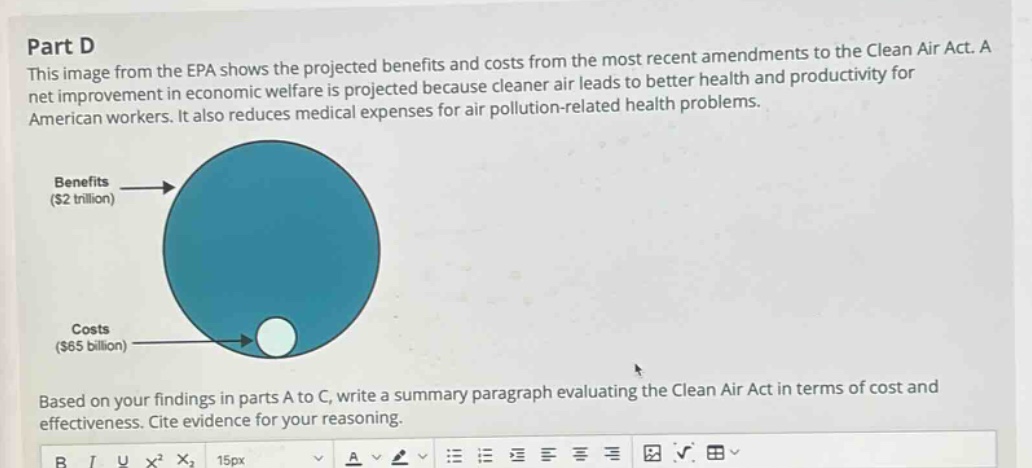
part d this image from the epa shows the projected benefits and costs from the most recent amendments to the clean air act. a net improvement in economic welfare is projected because cleaner air leads to better health and productivity for american workers. it also reduces medical expenses for air pollution - related health problems. based on your findings in parts a to c, write a summary paragraph evaluating the clean air act in terms of cost and effectiveness. cite evidence for your reasoning.
Answer
Brief Explanations:
The Clean Air Act amendments have projected benefits of $2 trillion and costs of $65 billion. Cleaner air improves worker health and productivity and reduces medical expenses. This large - scale benefit - cost ratio indicates the Act is highly effective in economic welfare terms. Evidence is the significant difference between benefits and costs as shown in the EPA image.
Answer:
The Clean Air Act amendments appear to be highly effective in terms of cost - effectiveness. The projected benefits of $2 trillion far outweigh the costs of $65 billion. Cleaner air leads to better health and productivity among American workers and reduces medical expenses related to air - pollution health problems, indicating a net improvement in economic welfare.