question 25 (2 points)\naccording to sherif and hovland, persuasive messages were the most likely to succeed…
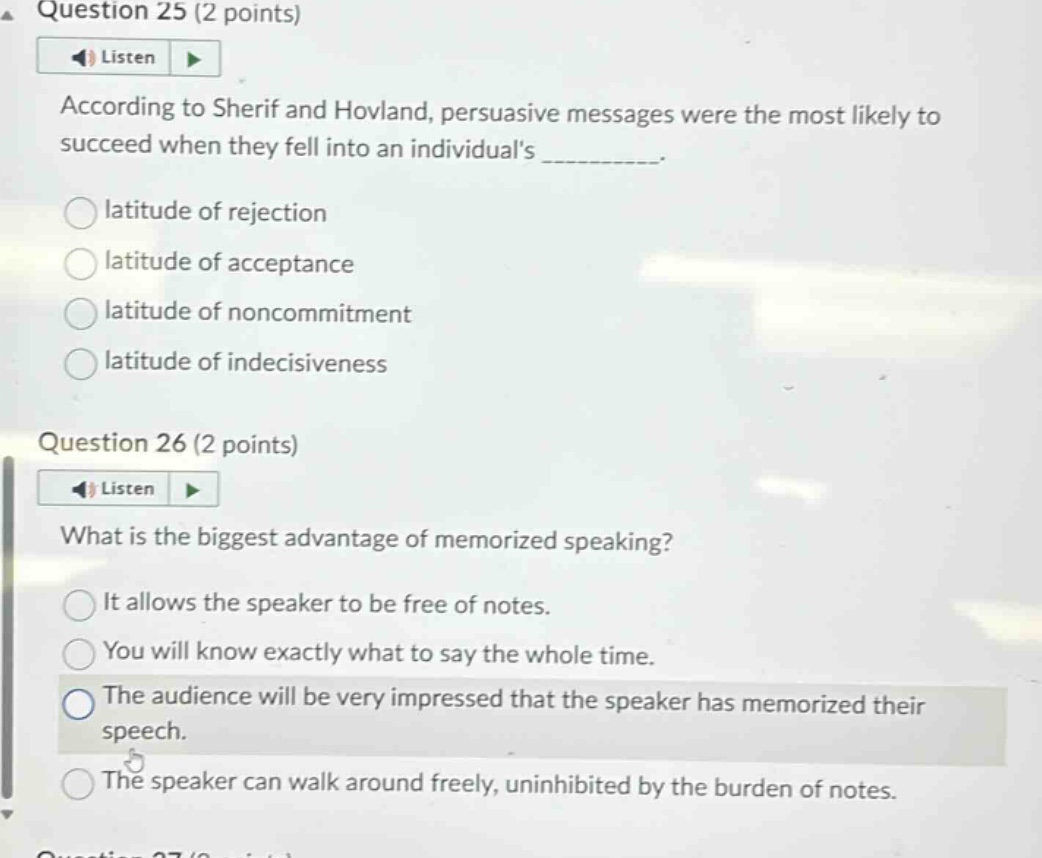
question 25 (2 points)\naccording to sherif and hovland, persuasive messages were the most likely to succeed when they fell into an individuals __________.\nlatitude of rejection\nlatitude of acceptance\nlatitude of noncommitment\nlatitude of indecisiveness\nquestion 26 (2 points)\nwhat is the biggest advantage of memorized speaking?\nit allows the speaker to be free of notes.\nyou will know exactly what to say the whole time.\nthe audience will be very impressed that the speaker has memorized their speech.\nthe speaker can walk around freely, uninhibited by the burden of notes.
Answer
Brief Explanations:
For Question 25, Sherif and Hovland's social - judgment theory states that persuasive messages are most likely to succeed when they fall into an individual's latitude of acceptance, where the individual is open to the message. For Question 26, the main advantage of memorized speaking is that the speaker knows exactly what to say throughout the speech, providing a sense of certainty and smoothness.
Answer:
Question 25: B. latitude of acceptance Question 26: B. You will know exactly what to say the whole time.