question\nwhen writing a narrative story, its helpful to read your draft and anticipate where a reader might…
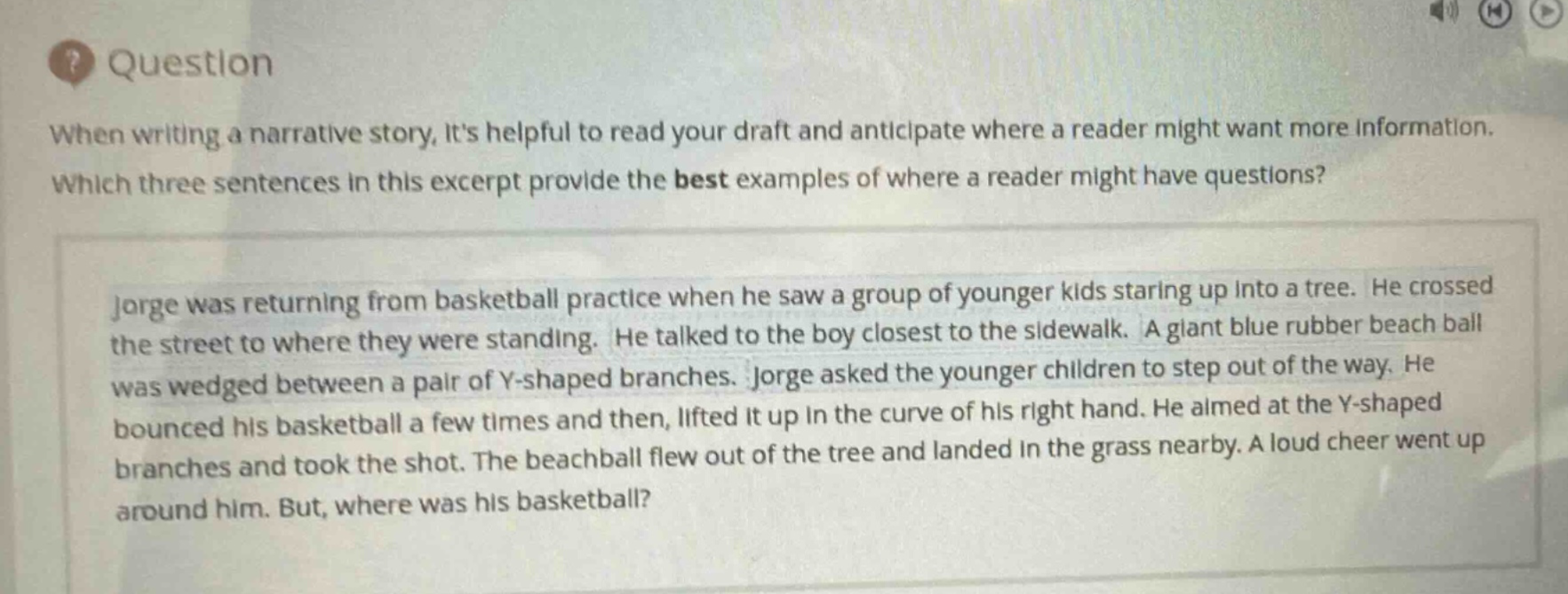
question\nwhen writing a narrative story, its helpful to read your draft and anticipate where a reader might want more information. which three sentences in this excerpt provide the best examples of where a reader might have questions?\njorge was returning from basketball practice when he saw a group of younger kids staring up into a tree. he crossed the street to where they were standing. he talked to the boy closest to the sidewalk. a giant blue rubber beach ball was wedged between a pair of y - shaped branches. jorge asked the younger children to step out of the way. he bounced his basketball a few times and then, lifted it up in the curve of his right hand. he aimed at the y - shaped branches and took the shot. the beachball flew out of the tree and landed in the grass nearby. a loud cheer went up around him. but, where was his basketball?
Answer
Answer:
- He talked to the boy closest to the sidewalk.
- He bounced his basketball a few times and then, lifted it up in the curve of his right hand.
- But, where was his basketball?
Brief Explanations:
- "He talked to the boy closest to the sidewalk" - Reader may wonder what was said.
- "He bounced his basketball a few times and then, lifted it up in the curve of his right hand" - Unclear why this specific action is done this way.
- "But, where was his basketball?" - Leaves a question about the basketball's whereabouts.