read the document and review the chart. making homemade syrups and candies takes practice. a good candymaker…
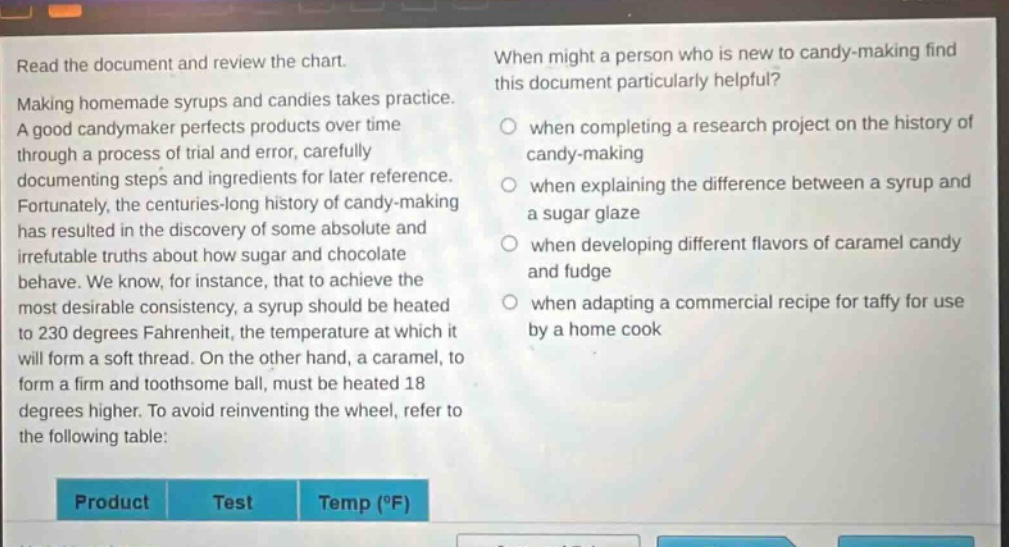
read the document and review the chart. making homemade syrups and candies takes practice. a good candymaker perfects products over time through a process of trial and error, carefully documenting steps and ingredients for later reference. fortunately, the centuries - long history of candy - making has resulted in the discovery of some absolute and irrefutable truths about how sugar and chocolate behave. we know, for instance, that to achieve the most desirable consistency, a syrup should be heated to 230 degrees fahrenheit, the temperature at which it will form a soft thread. on the other hand, a caramel, to form a firm and toothsome ball, must be heated 18 degrees higher. to avoid reinventing the wheel, refer to the following table: when might a person who is new to candy - making find this document particularly helpful? when completing a research project on the history of candy - making when explaining the difference between a syrup and a sugar glaze when developing different flavors of caramel candy and fudge when adapting a commercial recipe for taffy for use by a home cook product test temp (°f)
Answer
Brief Explanations:
The document provides practical candy - making temperature information. A home cook adapting a taffy recipe would benefit from this practical guidance. It's not about candy - making history, syrup vs sugar glaze differences, or flavor development.
Answer:
when adapting a commercial recipe for taffy for use by a home cook