review the details below.\n- chameleons may change colors to express emotional states, such as fear, anger…
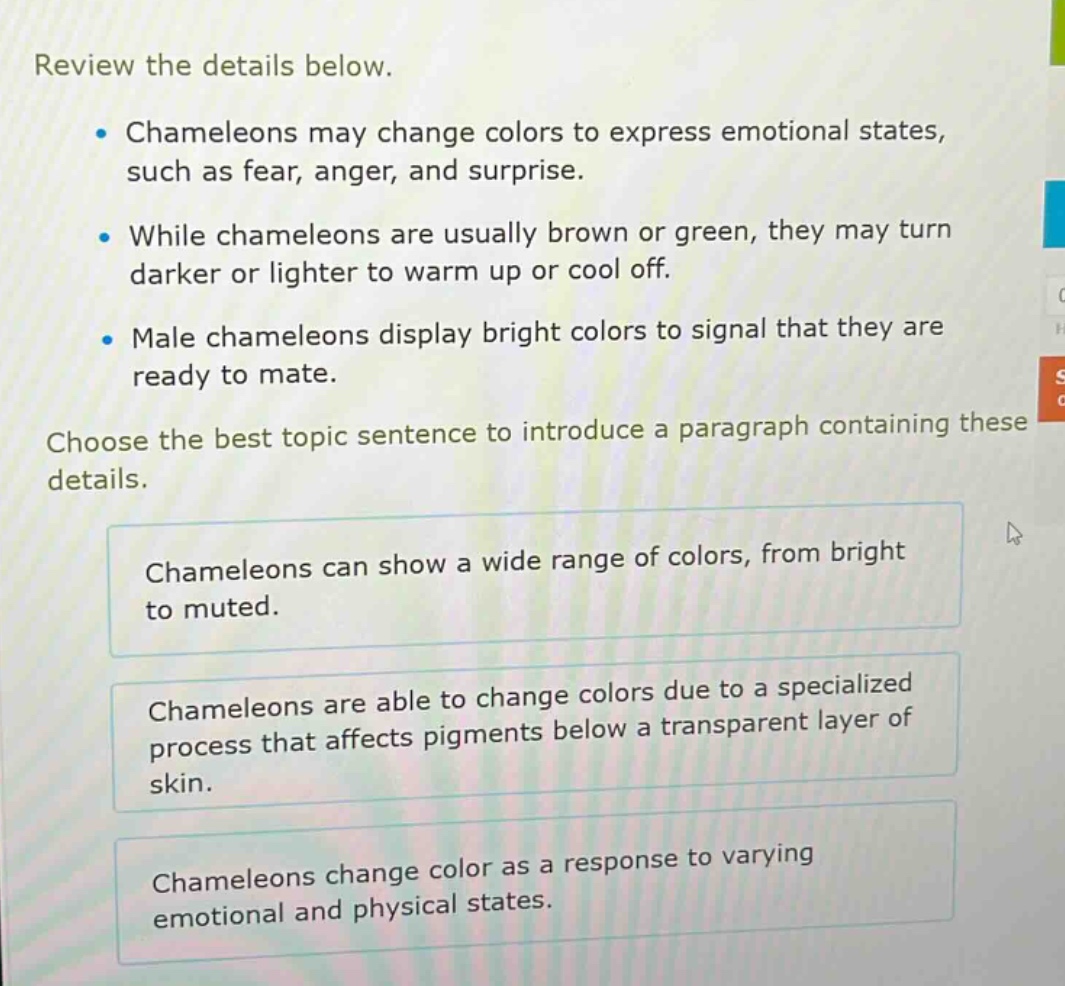
review the details below.\n- chameleons may change colors to express emotional states, such as fear, anger, and surprise.\n- while chameleons are usually brown or green, they may turn darker or lighter to warm up or cool off.\n- male chameleons display bright colors to signal that they are ready to mate.\nchoose the best topic sentence to introduce a paragraph containing these details.\nchameleons can show a wide range of colors, from bright to muted.\nchameleons are able to change colors due to a specialized process that affects pigments below a transparent layer of skin.\nchameleons change color as a response to varying emotional and physical states.
Answer
Answer:
Chameleons change color as a response to varying emotional and physical states.
Brief Explanations:
The details mention color - change for emotions like fear, anger, and for physical states like warming up or mating signals. This option best sums up these ideas.