select a significant moment: think of a specific event or moment from your life that holds personal…
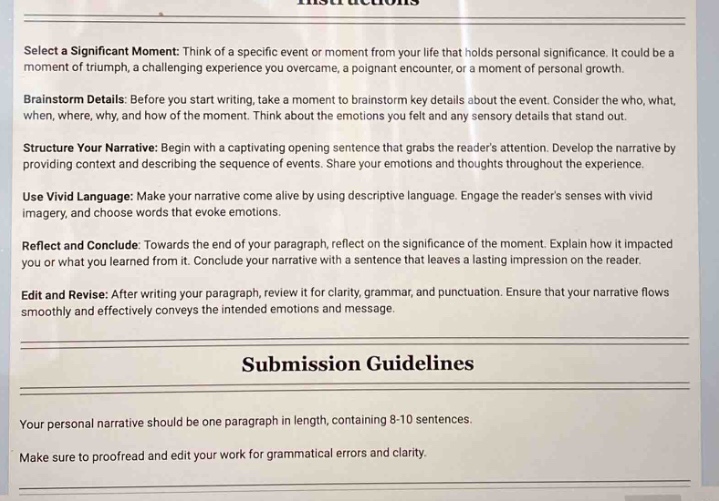
select a significant moment: think of a specific event or moment from your life that holds personal significance. it could be a moment of triumph, a challenging experience you overcame, a poignant encounter, or a moment of personal growth.\nbrainstorm details: before you start writing, take a moment to brainstorm key details about the event. consider the who, what, when, where, why, and how of the moment. think about the emotions you felt and any sensory details that stand out.\nstructure your narrative: begin with a captivating opening sentence that grabs the readers attention. develop the narrative by providing context and describing the sequence of events. share your emotions and thoughts throughout the experience.\nuse vivid language: make your narrative come alive by using descriptive language. engage the readers senses with vivid imagery, and choose words that evoke emotions.\nreflect and conclude: towards the end of your paragraph, reflect on the significance of the moment. explain how it impacted you or what you learned from it. conclude your narrative with a sentence that leaves a lasting impression on the reader.\nedit and revise: after writing your paragraph, review it for clarity, grammar, and punctuation. ensure that your narrative flows smoothly and effectively conveys the intended emotions and message.\n\nsubmission guidelines\n\nyour personal narrative should be one paragraph in length, containing 8 - 10 sentences.\nmake sure to proofread and edit your work for grammatical errors and clarity.
Answer
Brief Explanations:
The text provides a step - by - step guide on writing a personal narrative paragraph. It includes steps like selecting a moment, brainstorming details, structuring the narrative, using vivid language, reflecting and concluding, and editing. The submission guidelines specify the length and proofreading requirements.
Answer:
No specific question is asked. However, following these steps can help in crafting a well - written personal narrative paragraph of 8 - 10 sentences with proper proofreading for grammar and clarity.