the \so what?\ statement below is...\nrestate the argument\npoetry is more than just beautiful words…
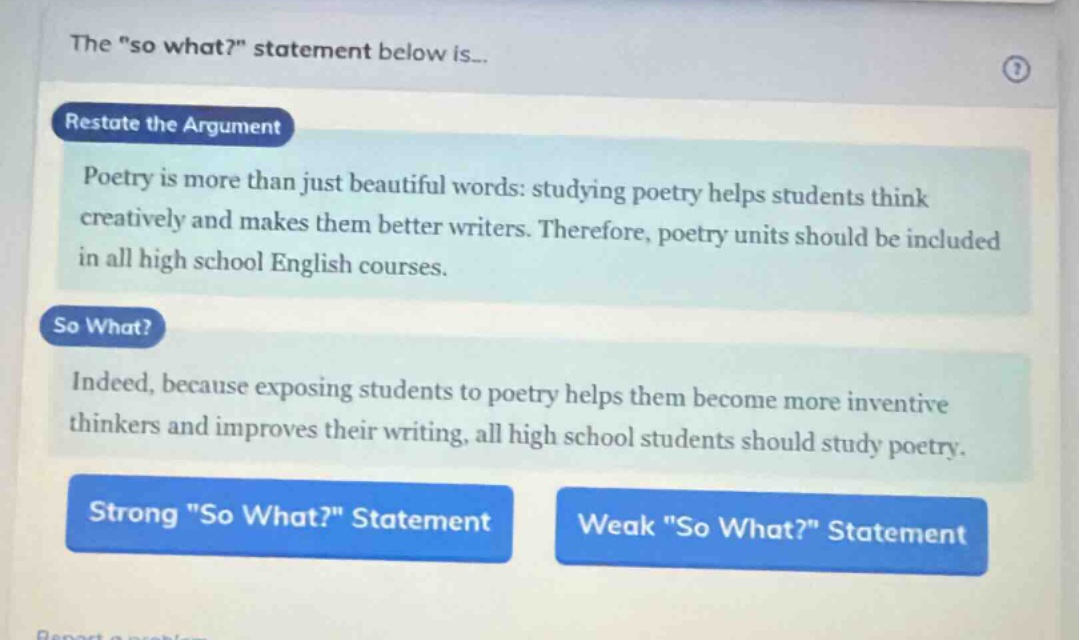
the \so what?\ statement below is...\nrestate the argument\npoetry is more than just beautiful words: studying poetry helps students think creatively and makes them better writers. therefore, poetry units should be included in all high school english courses.\nso what?\nindeed, because exposing students to poetry helps them become more inventive thinkers and improves their writing, all high school students should study poetry.\nstrong \so what?\ statement weak \so what?\ statement
Answer
Brief Explanations:
A strong "So What?" statement should go beyond just restating the argument. The original argument says poetry helps students think creatively and be better writers, so include poetry in high - school English courses. The "So What?" statement here restates that poetry helps with thinking and writing (similar to the original) and then says all high - school students should study poetry. It doesn't add new, deeper significance like how this could impact society, future careers in a more broad sense (beyond just being a better writer in school), or long - term cognitive development in a more elaborate way. It is mostly a rephrasing of the original argument.
Answer:
Weak "So What?" Statement