2.3.2 test 50 points\nmalala yousafzai - nobel lecture\ndirections: read the speech, by malala yousafzai…
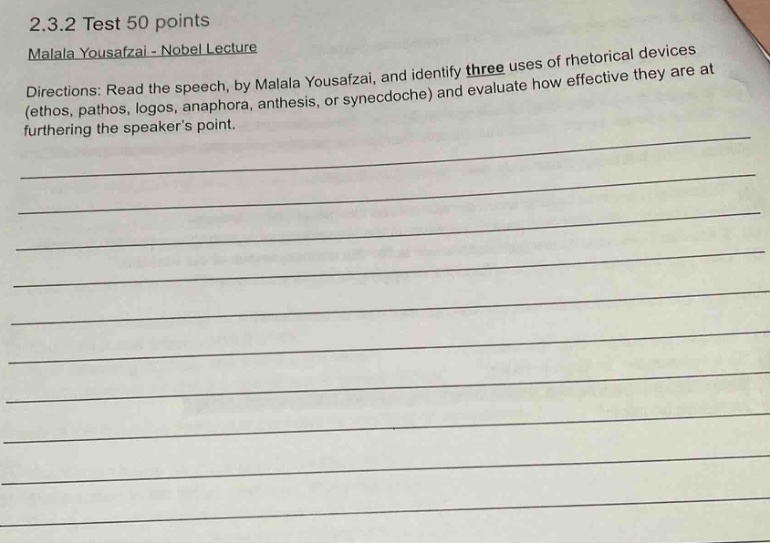
2.3.2 test 50 points\nmalala yousafzai - nobel lecture\ndirections: read the speech, by malala yousafzai, and identify three uses of rhetorical devices (ethos, pathos, logos, anaphora, antithesis, or synecdoche) and evaluate how effective they are at furthering the speakers point.
Answer
Brief Explanations:
- First, read Malala Yousafzai's Nobel Lecture carefully to identify instances of ethos (appeal to ethics/credibility), pathos (appeal to emotions), logos (appeal to logic), anaphora (repetition of a word or phrase at the start of clauses), antithesis (juxtaposition of contrasting ideas), or synecdoche (a part - whole substitution).
- For each identified rhetorical device, analyze how it helps convey Malala's message. For example, an appeal to pathos might evoke empathy in the audience, making them more receptive to her cause. An appeal to ethos can establish her credibility as a spokesperson for education rights. Logos can present rational arguments to support her stance.
- Evaluate the overall effectiveness of each device in furthering her point about the importance of education and human rights.
Answer:
This requires reading Malala Yousafzai's Nobel Lecture to identify and analyze the rhetorical devices. Without access to the actual speech, specific examples cannot be provided. However, the general approach is to first find the devices and then explain their effectiveness in furthering her message.