what three things must a writer use to develop a successful argument?\no inductive and deductive reasoning…
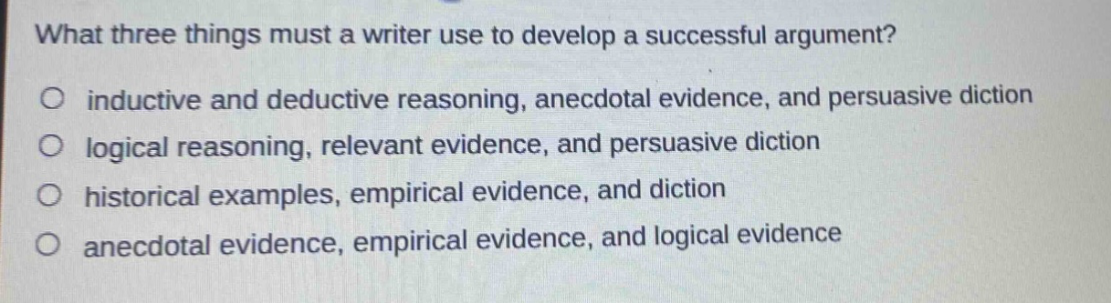
what three things must a writer use to develop a successful argument?\no inductive and deductive reasoning, anecdotal evidence, and persuasive diction\no logical reasoning, relevant evidence, and persuasive diction\no historical examples, empirical evidence, and diction\no anecdotal evidence, empirical evidence, and logical evidence
Answer
Brief Explanations:
A successful argument needs logical reasoning to build a sound structure, relevant evidence to support claims, and persuasive diction to engage the audience effectively. Anecdotal evidence alone is not always reliable, and historical or empirical evidence without logical reasoning and persuasive language may not be as effective.
Answer:
B. logical reasoning, relevant evidence, and persuasive diction