QUESTION IMAGE
Question
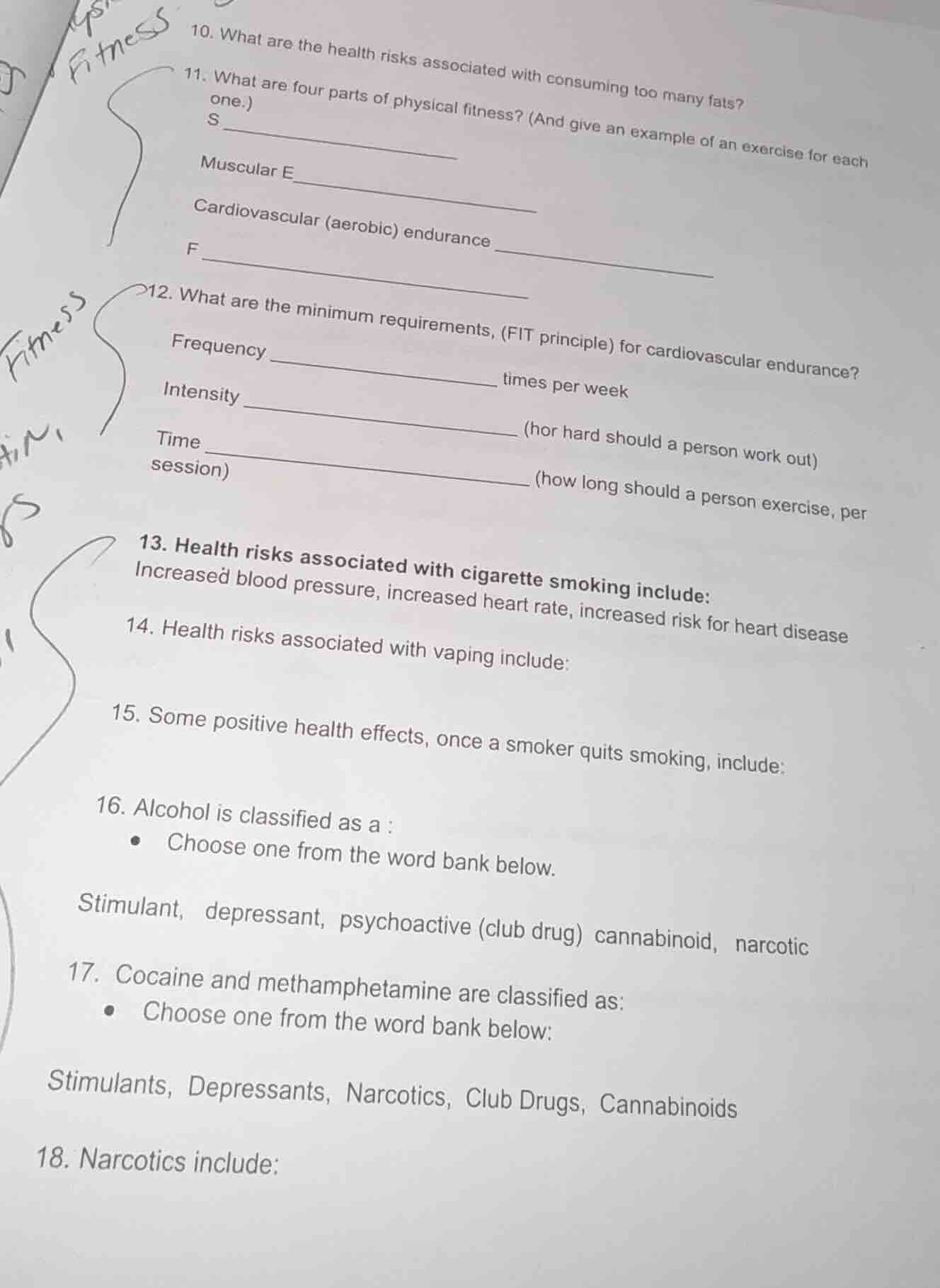
- what are the health risks associated with consuming too many fats?
- what are four parts of physical fitness? (and give an example of an exercise for each one.)
s ______
muscular e ______
cardiovascular (aerobic) endurance ______
f ______
- what are the minimum requirements, (fit principle) for cardiovascular endurance?
frequency ______ times per week
intensity ______ (hor hard should a person work out)
time ______ (how long should a person exercise, per session)
- health risks associated with cigarette smoking include:
increased blood pressure, increased heart rate, increased risk for heart disease
- health risks associated with vaping include:
- some positive health effects, once a smoker quits smoking, include:
- alcohol is classified as a :
- choose one from the word bank below.
stimulant, depressant, psychoactive (club drug) cannabinoid, narcotic
- cocaine and methamphetamine are classified as:
- choose one from the word bank below:
stimulants, depressants, narcotics, club drugs, cannabinoids
- narcotics include:
Question 10
Consuming excessive fats, especially saturated and trans fats, can lead to health issues. High fat intake leads to weight gain/obesity as fat is high in calories. It raises blood cholesterol (LDL), increasing atherosclerosis (plaque in arteries) risk, which can cause heart disease (coronary artery disease, heart attacks) and stroke. It also strains the liver, potentially leading to non - alcoholic fatty liver disease, and increases the risk of type 2 diabetes by promoting insulin resistance.
The four parts of physical fitness are:
- Strength (S): The ability of muscles to exert force. Example exercise: Weightlifting (e.g., bicep curls) as it targets muscle groups to build strength.
- Muscular Endurance (E): The ability of muscles to repeat contractions over time. Example: Push - ups (multiple repetitions work on chest, shoulder, and tricep endurance).
- Cardiovascular (aerobic) endurance: The ability of the heart and lungs to supply oxygen during sustained physical activity. Example: Running (jogging) as it keeps the heart rate elevated and uses oxygen over a period.
- Flexibility (F): The range of motion in joints. Example: Stretching (e.g., hamstring stretch) to improve joint and muscle flexibility.
The FIT principle for cardiovascular endurance:
- Frequency: The number of times you exercise per week. For cardiovascular endurance, the minimum is 3 - 5 times per week.
- Intensity: How hard you work out. It's often measured as a percentage of maximum heart rate (e.g., 50 - 85% of max heart rate) or perceived exertion (moderate to vigorous, like being able to talk but not sing during exercise).
- Time: How long per exercise session. The minimum is 20 - 30 minutes of continuous aerobic activity (e.g., brisk walking, cycling) per session.

Snap & solve any problem in the app
Get step-by-step solutions on Sovi AI
Photo-based solutions with guided steps
Explore more problems and detailed explanations
Health risks of too many fats: Weight gain/obesity, elevated blood cholesterol (LDL) increasing heart disease (e.g., coronary artery disease, heart attack) and stroke risk, non - alcoholic fatty liver disease, and increased type 2 diabetes risk due to insulin resistance.