QUESTION IMAGE
Question
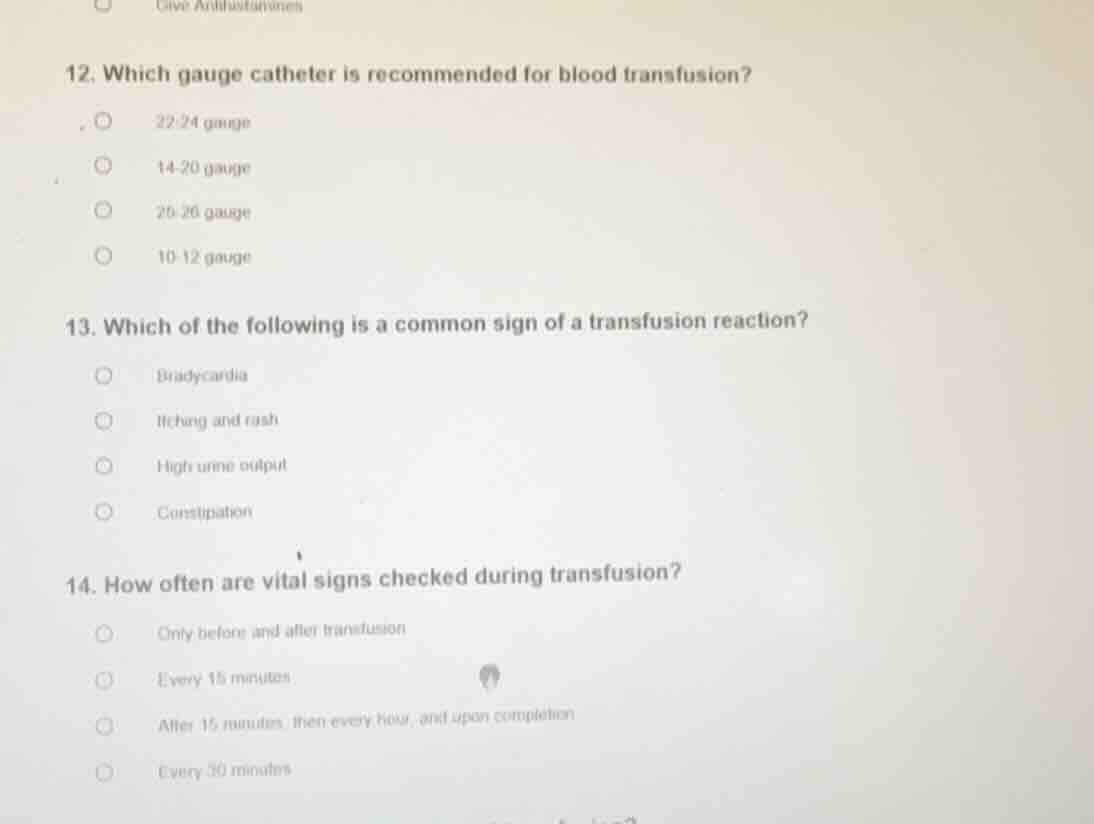
- which gauge catheter is recommended for blood transfusion?
22-24 gauge
14-20 gauge
20-26 gauge
10-12 gauge
- which of the following is a common sign of a transfusion reaction?
bradycardia
itching and rash
high urine output
constipation
- how often are vital signs checked during transfusion?
only before and after transfusion
every 15 minutes
after 15 minutes, then every hour, and upon completion
every 30 minutes
Question 12
For blood transfusion, the recommended catheter gauge is typically 14 - 20 gauge as it allows for efficient flow of blood products. Smaller gauges (like 22 - 24 or 20 - 26) may be too narrow, and larger gauges (10 - 12) are usually not necessary for routine blood transfusion.
Transfusion reactions, especially allergic ones, commonly present with itching and rash. Bradycardia is not typical, high urine output is not a sign, and constipation is unrelated to transfusion reactions.
During blood transfusion, vital signs are checked after the first 15 minutes, then every hour, and upon completion. This is to monitor for any transfusion - related reactions. Checking only before/after or at fixed 15/30 - minute intervals is not the standard practice.

Snap & solve any problem in the app
Get step-by-step solutions on Sovi AI
Photo-based solutions with guided steps
Explore more problems and detailed explanations
B. 14 - 20 gauge