QUESTION IMAGE
Question
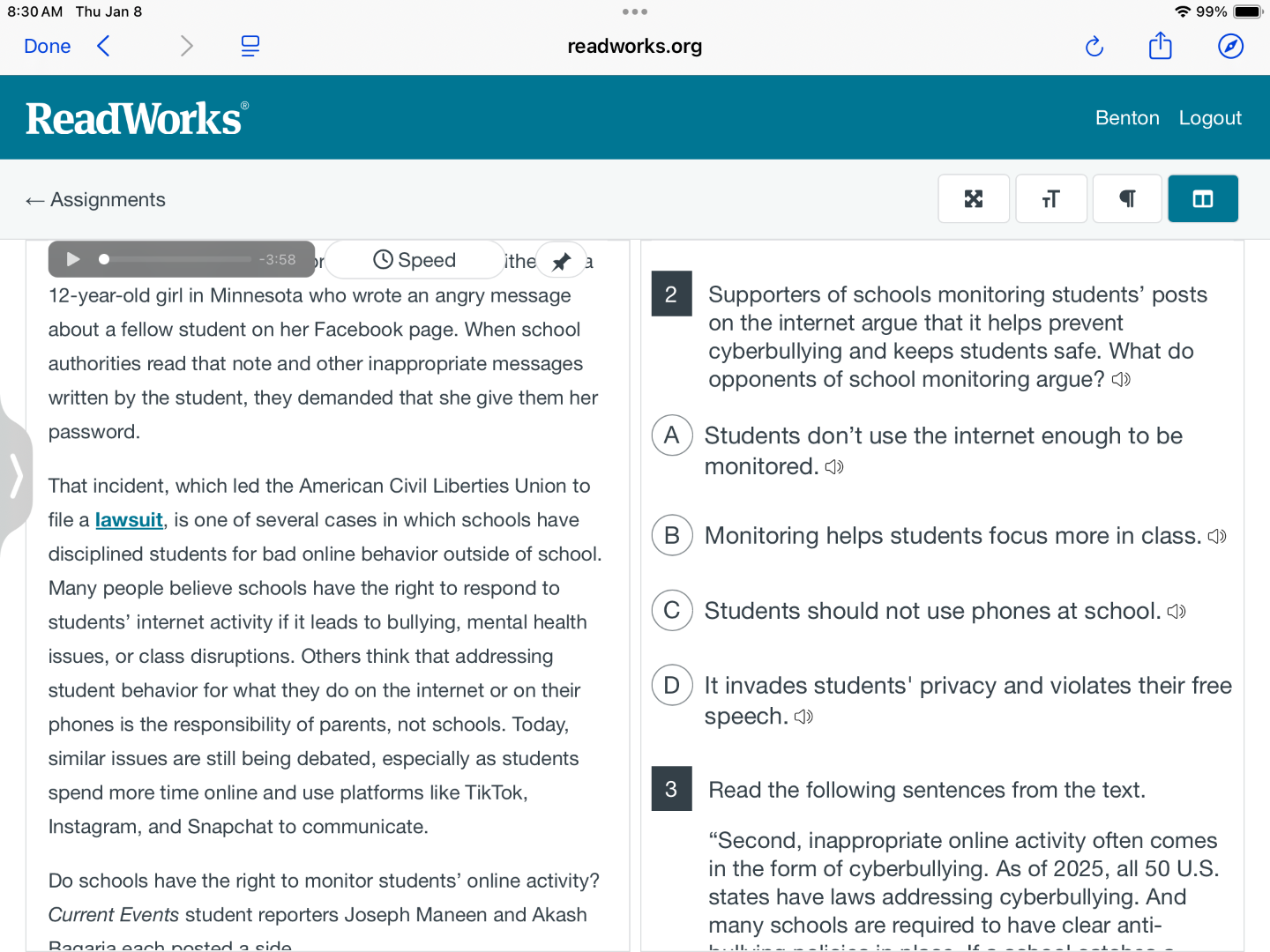
12-year-old girl in minnesota who wrote an angry message about a fellow student on her facebook page. when school authorities read that note and other inappropriate messages written by the student, they demanded that she give them her password.
that incident, which led the american civil liberties union to file a lawsuit, is one of several cases in which schools have disciplined students for bad online behavior outside of school. many people believe schools have the right to respond to students’ internet activity if it leads to bullying, mental health issues, or class disruptions. others think that addressing student behavior for what they do on the internet or on their phones is the responsibility of parents, not schools. today, similar issues are still being debated, especially as students spend more time online and use platforms like tiktok, instagram, and snapchat to communicate.
do schools have the right to monitor students’ online activity? current events student reporters joseph maneen and akash
2 supporters of schools monitoring students’ posts on the internet argue that it helps prevent cyberbullying and keeps students safe. what do opponents of school monitoring argue?
a students don’t use the internet enough to be monitored.
b monitoring helps students focus more in class.
c students should not use phones at school.
d it invades students privacy and violates their free speech.
3 read the following sentences from the text.
“second, inappropriate online activity often comes in the form of cyberbullying. as of 2025, all 50 u.s. states have laws addressing cyberbullying. and many schools are required to have clear anti-
The text mentions a lawsuit by the ACLU over a school demanding a student's social media password, implying concerns about privacy and rights. Opponents typically argue against monitoring on grounds of violating personal privacy and free speech, which aligns with option D. The other options are irrelevant (A, C) or support monitoring (B).

Snap & solve any problem in the app
Get step-by-step solutions on Sovi AI
Photo-based solutions with guided steps
Explore more problems and detailed explanations
D. It invades students' privacy and violates their free speech.