QUESTION IMAGE
Question
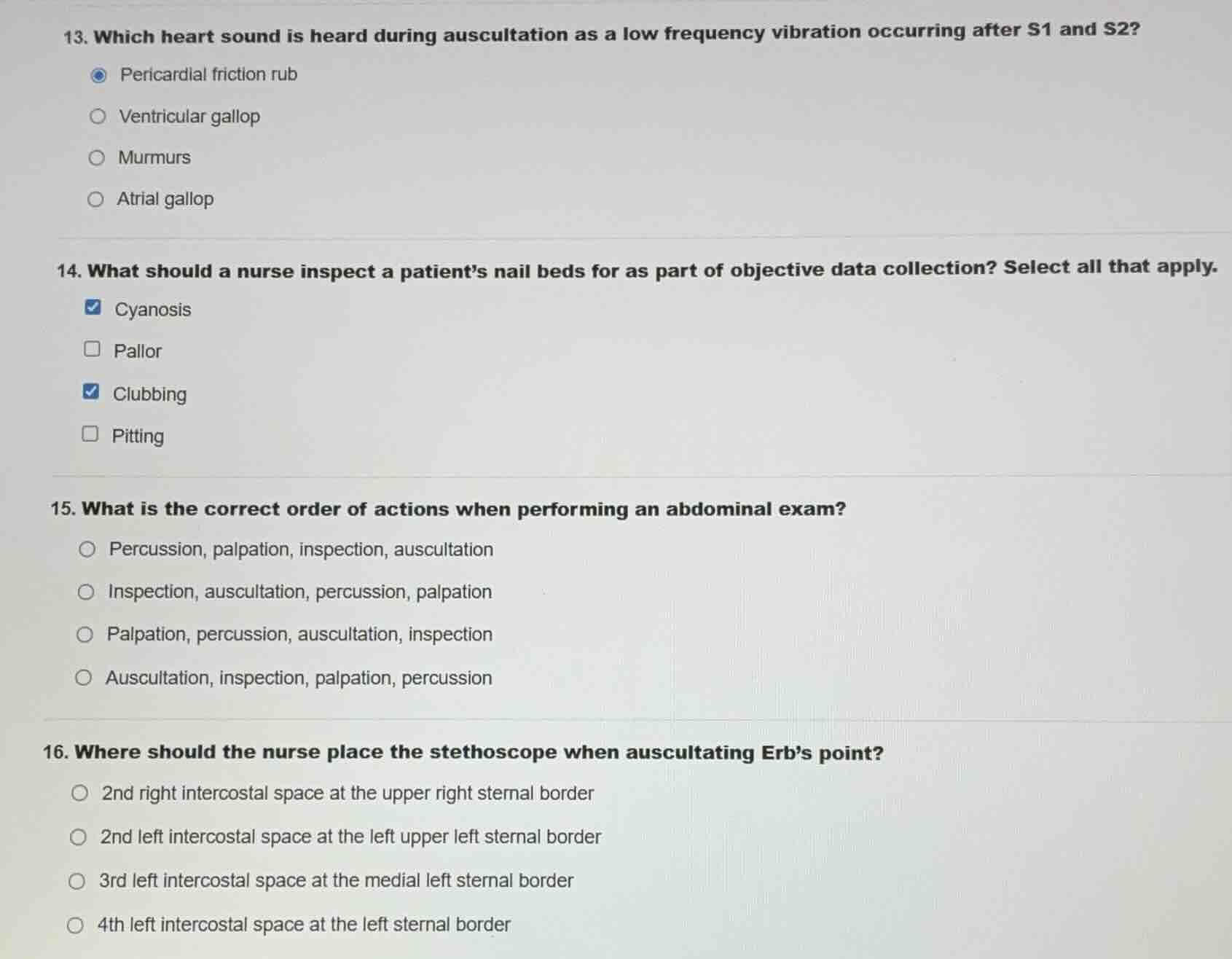
- which heart sound is heard during auscultation as a low frequency vibration occurring after s1 and s2?
pericardial friction rub
ventricular gallop
murmurs
atrial gallop
- what should a nurse inspect a patient’s nail beds for as part of objective data collection? select all that apply.
cyanosis
pallor
clubbing
pitting
- what is the correct order of actions when performing an abdominal exam?
percussion, palpation, inspection, auscultation
inspection, auscultation, percussion, palpation
palpation, percussion, auscultation, inspection
auscultation, inspection, palpation, percussion
- where should the nurse place the stethoscope when auscultating erb’s point?
2nd right intercostal space at the upper right sternal border
2nd left intercostal space at the left upper left sternal border
3rd left intercostal space at the medial left sternal border
4th left intercostal space at the left sternal border
Brief Explanations
- Ventricular gallop (S3) is a low-frequency sound occurring after S1 and S2. Pericardial friction rub is a high-pitched grating sound, murmurs are turbulent flow sounds, and atrial gallop (S4) occurs before S1.
- Cyanosis (bluish discoloration), pallor (pale discoloration), and clubbing (nail bed thickening) are all nail bed findings assessed in objective data collection. Pitting is assessed in skin/tissue edema, not nail beds.
- Abdominal exams start with inspection (visual assessment), then auscultation (to avoid altering bowel sounds with palpation/percussion), followed by percussion, and finally palpation.
- Erb's point is located at the 3rd left intercostal space at the medial left sternal border, used to auscultate heart sounds and murmurs.

Snap & solve any problem in the app
Get step-by-step solutions on Sovi AI
Photo-based solutions with guided steps
Explore more problems and detailed explanations
- Ventricular gallop
- A. Cyanosis, B. Pallor, C. Clubbing
- Inspection, auscultation, percussion, palpation
- 3rd left intercostal space at the medial left sternal border