QUESTION IMAGE
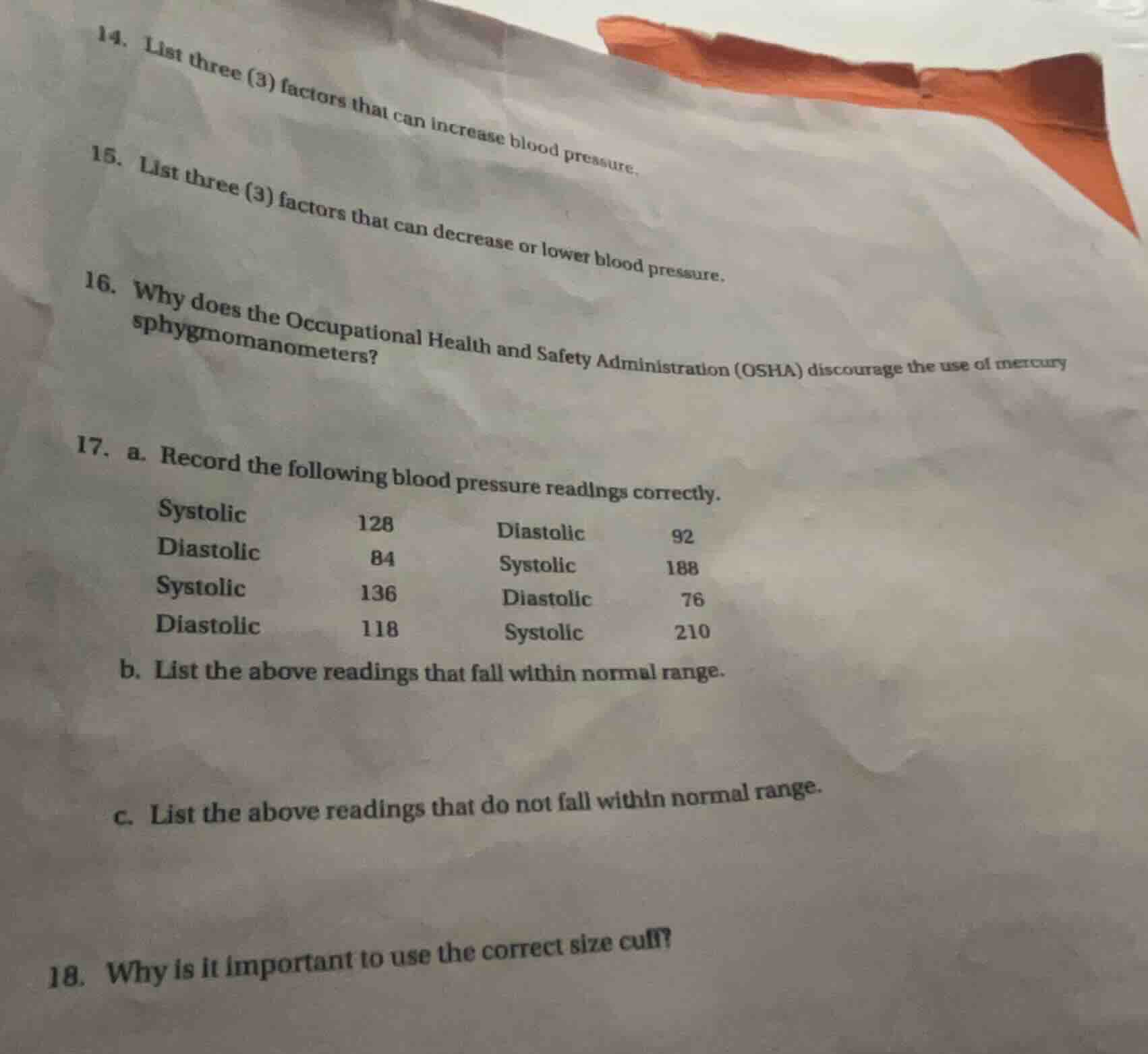
Question
- list three (3) factors that can increase blood pressure.
- list three (3) factors that can decrease or lower blood pressure.
- why does the occupational health and safety administration (osha) discourage the use of mercury sphygmomanometers?
- a. record the following blood pressure readings correctly.
systolic 128 diastolic 92
diastolic 84 systolic 188
systolic 136 diastolic 76
diastolic 118 systolic 210
b. list the above readings that fall within normal range.
c. list the above readings that do not fall within normal range.
- why is it important to use the correct size cuff?
For Question 14:
These factors are established to raise blood pressure by affecting vascular resistance, fluid retention, or nervous system activity.
For Question 15:
These factors reduce blood pressure by improving vascular health, reducing fluid volume, or lowering systemic resistance.
For Question 16:
Mercury is a toxic heavy metal. Spills pose severe health risks (neurological damage, organ harm) and environmental contamination, which OSHA works to prevent in workplaces.
For Question 17a:
Blood pressure is recorded as systolic/diastolic, pairing each matching set of readings.
For Question 17b:
Normal blood pressure is defined as systolic < 120 and diastolic < 80, so only readings meeting this are included.
For Question 17c:
These readings exceed the normal range for systolic, diastolic, or both.
For Question 18:
An ill-fitting cuff distorts the pressure reading: a too-small cuff overestimates pressure, while a too-large cuff underestimates it, leading to inaccurate health assessments.

Snap & solve any problem in the app
Get step-by-step solutions on Sovi AI
Photo-based solutions with guided steps
Explore more problems and detailed explanations
14.
- High sodium intake
- Chronic stress
- Lack of physical activity
15.
- Regular aerobic exercise
- Low-sodium, plant-rich diet
- Maintaining a healthy weight
16.
Mercury is a highly toxic substance; accidental spills in workplaces can cause serious neurological, kidney, and other organ damage to workers, and also contaminate the environment, so OSHA discourages their use to protect employee health and safety.
17a.
- 128/92
- 188/84
- 136/76
- 210/118
17b.
None of the recorded readings fall within the normal range.
17c.
- 128/92
- 188/84
- 136/76
- 210/118
18.
Using the correct size cuff ensures accurate blood pressure readings; an incorrect size can lead to inaccurate (either overestimated or underestimated) measurements, which can result in misdiagnosis or improper treatment decisions.